
The Illusion of Stability
MG News | June 12, 2026 at 01:43 PM GMT+05:00

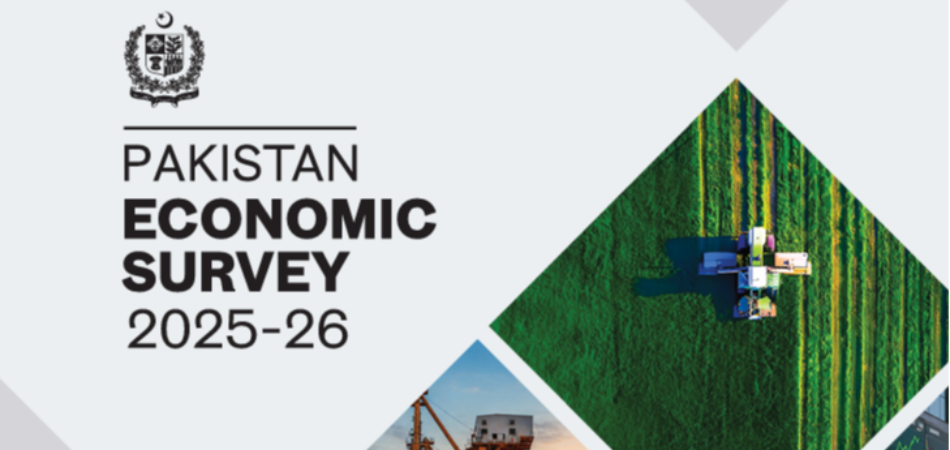
June 12, 2026 (MLN): Pakistan enters FY2026 with the best headline numbers it has produced in years: GDP growth of 3.7 percent, a historic primary surplus of 3.2 percent of GDP, inflation down to a 6.2 percent average from crisis-period peaks above 30 percent, and foreign exchange reserves at multi-year highs.
On the surface, this reads as a genuine stabilisation story. But a rigorous reading of the Economic Survey of Pakistan reveals something more complicated, a stabilisation that is real, but shallow; measurable, but fragile; and dependent on conditions that cannot be assumed to persist.
The Macro Scorecard
|
INDICATOR |
READING |
SIGNAL |
|
GDP growth (FY26) |
3.70% |
Moderate |
|
Primary surplus (Jul–Mar) |
3.2% of GDP |
Strong |
|
Fiscal deficit (Jul–Mar) |
0.7% of GDP |
Positive |
|
CPI inflation avg. (Jul–Apr) |
6.2% |
Trending up |
|
Current account (Jul–Mar) |
+US$72M |
Marginal |
|
FX reserves (end-Mar) |
US$21.8B |
Improved |
|
Investment-to-GDP |
14.38% |
Structural low |
|
Tax-to-GDP (FBR) |
~10.3% |
Critically low |
|
Public debt-to-GDP (est.) |
~94% |
Unsustainable |
|
Poverty headcount (2024-25) |
28.9% |
Rising |
|
Unemployment rate (2024-25) |
7.1% |
Worsening |
|
Goods exports growth (Jul–Mar) |
–8.0% |
Declining |
What the Survey Claims
GDP growth of 3.70 percent in FY2026 is presented as a recovery story: better than the prior year’s 3.18 percent, powered by LSM revival (6.1 percent growth), services expansion (4.09 percent), and agricultural resilience (2.89 percent) despite the 2025 floods.
The Critical Reading
Pakistan’s population is growing at 2.07 percent annually, with a labour force expanding rapidly. GDP growth of 3.7 percent translates into per capita income growth of barely 1.6 percent, insufficient to make meaningful dents in poverty or unemployment.
The Survey’s own data confirm this: the poverty headcount rose to 28.9 percent in 2024-25, unemployment rose to 7.1 percent, and real per capita income, while recovering to US$1,901, remains below the level of several years prior. Pakistan is growing, but it is not developing at the pace its demographic pressures demand.
More structurally concerning is the investment-to-GDP ratio of just 14.38 percent, one of the lowest among comparator emerging markets and historically insufficient to sustain growth above 5 to 6 percent on a durable basis.
Countries that have escaped the
middle-income trap, Bangladesh, Vietnam, Indonesia, sustained investment
rates above 25 to 30 percent of GDP for extended periods. Pakistan’s investment
rate has been stuck in the low-to-mid teens for years, and the Survey offers no
credible mechanism to break that constraint.
The LSM revival is real, but it requires contextualisation. After multiple consecutive years of contraction, any recovery in manufacturing will look impressive.
The critical question, what is driving it, and is it durable?, points to eased monetary policy, a stabilised exchange rate, and improved input imports rather than productivity gains, technology upgrading, or new export markets.
The Survey acknowledges that goods exports actually declined by 8 percent during July-March FY2026. A manufacturing revival not accompanied by export growth is a domestic consumption story, not a structural transformation story.
The Primary Surplus Illusion
The Survey presents the fiscal picture as its strongest achievement: a primary surplus of 3.2 percent of GDP (July-March), fiscal deficit compressed to 0.7 percent of GDP, markup payments down 23.2 percent in absolute terms, and revenue growing by 10.7 percent year-on-year. FBR collection reached Rs9,305.9 billion, up 10.1 percent.
The primary surplus, while arithmetically genuine, is achieved through a combination of high interest rates suppressing private sector borrowing, compressed development spending in prior years, and inherited windfall from one-time non-tax revenues.
The Survey’s own numbers
reveal the underlying pathology: markup expenditure alone consumed Rs4,947.9
billion during July-March, equivalent to roughly 3.9 percent of full-year GDP
just in interest payments over nine months. Pakistan’s debt service burden remains
the single largest line item in federal expenditure, crowding out everything
else.
The tax-to-GDP ratio, after years of IMF-backed reform, has reached approximately 10.3 percent of GDP. This is structurally among the lowest of any country with Pakistan’s income level.
Pakistan’s narrow tax base, dominated by indirect taxes, reliant on withholding mechanisms that target the documented rather than the wealthy, and exempting agriculture income and large swaths of real estate, means that the state cannot fund public investment in education, health, and infrastructure that drives long-run growth without perpetual borrowing.
The Survey
acknowledges this structural problem in every edition. Acknowledging it is not
the same as resolving it.
Key Fiscal Indicators
|
FISCAL INDICATOR |
FY26 JUL-MAR |
FY25 JUL-MAR |
VERDICT |
|
Fiscal deficit |
0.7% of GDP |
2.6% of GDP |
Improved |
|
Primary surplus |
3.2% of GDP |
3.0% of GDP |
Improved |
|
Markup payments |
Rs4,947.9B (–23.2%) |
Rs6,444B (est.) |
Lower (rate effect) |
|
FBR tax collection |
Rs9,305.9B (+10.1%) |
— |
Below nominal GDP growth |
|
Tax-to-GDP (FBR) |
~10.3% |
9.6% |
Critically low |
|
Development expenditure |
Rs1,947.1B (+26.8%) |
— |
Recovering (low base) |
Debt Dynamics
Total public debt stood at Rs83,285 billion by end-March 2026, comprising Rs57,566 billion in domestic debt and Rs25,720 billion in external debt. External public debt at US$92.2 billion represents one of the highest external debt stocks in South Asia.
The Survey notes that
public debt growth has been “contained at 3.4 percent” over nine months, true
in rupee terms. But assessed against the economy’s capacity to service, the
picture is more sobering: debt-to-GDP is estimated at approximately 94 percent
of GDP, a level that places Pakistan in a category of genuine debt distress
among developing economies.
What has changed is the debt management: the government has extended average time-to-maturity from 3.5 years to 3.86 years, increased fixed-rate instruments from 19 to 27.6 percent of the portfolio, and successfully re-accessed international capital markets including a Panda Bond.
These are real improvements in the debt management toolkit. But they address the symptom, rollover risk and cost, not the disease, which is a structural revenue-expenditure imbalance that, without IMF support, would likely reassert itself and prevent meaningful debt reduction.
IMF debt stands at US$9.9 billion, Paris Club at US$5.5 billion, and Chinese bilateral creditors at approximately US$19.0 billion. This creditor concentration significantly constrains Pakistan’s policy autonomy.
Remittance Dependency
The current account posted a marginal surplus of US$72 million over July-March FY2026, a significant improvement from the crisis-period deficits of FY2023.
Workers’ remittances reached US$30.3 billion (+8.2 percent), FX reserves climbed to US$21.8 billion, and the exchange rate remained stable at around Rs280-281 per US dollar.
The current account surplus is paper-thin and structurally fragile. Goods exports declined by 8 percent, and the merchandise trade deficit actually widened to US$27.9 billion from US$22.7 billion.
The “surplus” exists only because of remittance inflows of US$30.3
billion, a figure that represents the export of human capital rather than the
creation of competitive industries. Pakistan’s current account is structurally
remittance-dependent: remove that cushion, and the economy runs a large
structural deficit.
The export base has also not diversified in any meaningful structural sense. Textiles still account for approximately 60 percent of merchandise exports. The Survey highlights ICT export growth of 19.8 percent (reaching approximately US$3.38 billion) with some enthusiasm, and rightly so, this is a genuine bright spot and a potential diversification pathway.
But US$3.38 billion in IT exports against a US$50.7 billion import
bill and a textile-dominant export portfolio underscores the distance that
remains.
Transport imports surged 82.8 percent, largely attributed to the liberalisation of used car imports. This reflects recovering domestic demand, but also points to a recurring pattern in Pakistan’s stabilisation cycles: import suppression during a crisis, followed by a consumer import surge during recovery, which then widens the trade deficit and eventually pressures the current account, the exchange rate, and the reserves. The seeds of the next external imbalance are visible in this year’s data.
Inflation
Average CPI inflation of 6.2 percent for July-April FY2026 is a genuine improvement from the 28-29 percent crisis peaks of FY2023. But the Survey’s own data reveal that inflation rose sharply from 7.3 percent in March 2026 to 10.9 percent in April 2026, attributed to global oil prices and Middle East supply disruptions.
Global crude oil prices surged
nearly 78 percent year-on-year by April 2026, urea prices rose 121.5 percent,
and soybean oil increased 45 percent. Pakistan, a large importer of petroleum,
LNG, edible oils, and fertilisers, is acutely exposed to these shocks.
Core inflation in rural areas, while declining from 11.6 percent to 8.2 percent, remains sticky and elevated.
The structural drivers of inflation in Pakistan, energy tariff pass-throughs, circular debt dynamics, fiscal financing through monetary channels, and commodity import dependence, have been dampened rather than removed.
The policy rate cutting cycle is already underway; if inflation re-accelerates materially, the SBP faces a difficult choice between sustaining growth and containing prices, with limited credibility buffers given the history of fiscal dominance over monetary policy.
Energy Sector
The Survey notes that total installed generation capacity stands at 49,651 MW against peak demand that is substantially lower, and that energy affordability remains a “challenge.”
The challenge is not merely distributional but structural: tariffs high enough to cover capacity payments are unaffordable to industry and households; tariffs low enough to support economic activity are fiscally unsustainable and expand the circular debt stock.
This contradiction is not close to resolution. The energy sector reform cited in the Survey, including a multi-buyer market, NEPRA regulatory strengthening, and IPP renegotiations, is directionally correct but has been in progress for years with limited impact on the fundamental cost structure.
The Human Cost of Stabilisation
Perhaps the most sobering data in the entire Survey are the social indicators. Poverty increased to 28.9 percent in 2024-25.
Unemployment rose from 6.3 to 7.1 percent. These numbers follow years of inflation, fiscal consolidation, and adjustment that compressed real household incomes.
Education expenditure at 0.8 percent of GDP, one of the lowest ratios in the world for a country of Pakistan’s size, reflects a government that has consistently prioritised debt service over human capital investment.
Literacy reached 63 percent, with female literacy at 54 percent;
out-of-school children declined but remain in the tens of millions.
This is not collateral damage that can be separated from the macroeconomic story, it is its central political economy constraint. Pakistan’s macro stabilisation programmes have historically collapsed not because technical policy errors were made, but because the social cost of adjustment created political unsustainability that reversed reforms.
Rising poverty and unemployment in the current consolidation cycle create the same dynamics. BISP transfers remain insufficient in scale and precision to offset the distributional impact of energy tariff hikes, food price volatility, and fiscal compression.
Pakistan is on the path toward stabilisation, not trapped in a completed macro crisis. The direction of travel is genuinely positive and the FY2026 numbers are not fabricated.
But it is not yet moving toward transformation, the structural changes needed to break the stop-go growth cycle have not been made at the depth or speed required.
Five Structural Reforms the Survey Avoids Quantifying
|
REFORM AREA |
CURRENT STATUS (FY26) |
WHAT GENUINE PROGRESS WOULD
REQUIRE |
|
Agricultural income tax |
Largely untaxed; provinces have
jurisdiction but collection is negligible |
Mandatory federal floor,
data-sharing between land records and FBR, political will to confront
agrarian elite |
|
Real estate documentation |
SROs and exempt categories
shield most real estate transactions from capital gains and transaction taxes |
Elimination of differential
valuation tables; integration of FBR with provincial property records |
|
IPP capacity payment reform |
Renegotiations ongoing; 13 IPPs
flagged for decommissioning |
Systematic buyout or
renegotiation of all RFO-based legacy PPAs; competitive power market at scale |
|
SOE privatisation |
‘Priority transactions’ cited;
PIA, DISCOs, steel mills remain liabilities |
Credible binding privatisation
timeline with regulatory unbundling, not asset sales to friendly parties |
|
Export diversification |
Textiles ~60% of goods exports;
IT growing but from a small base |
Sector-specific industrial
policy, DLTL expansion to non-textile exports, skills pipeline for IT
scale-up |
Copyright Mettis Link News
Related News


| Name | Price/Vol | %Chg/NChg |
|---|---|---|
| KSE100 | 167,089.28 109.91M | -0.21% -352.63 |
| ALLSHR | 101,117.40 308.32M | -0.15% -155.10 |
| KSE30 | 49,841.71 50.59M | -0.28% -142.15 |
| KMI30 | 240,372.43 78.75M | -0.02% -45.72 |
| KMIALLSHR | 65,518.16 188.07M | -0.05% -35.70 |
| BKTi | 46,228.77 7.60M | -0.60% -281.04 |
| OGTi | 33,974.66 4.20M | -0.27% -91.31 |
| Symbol | Bid/Ask | High/Low |
|---|
| Name | Last | High/Low | Chg/%Chg |
|---|---|---|---|
| BITCOIN FUTURES | 83,505.00 | 84,320.00 82,645.00 | 1035.00 1.26% |
| BRENT CRUDE | 104.54 | 0.00 0.00 | -0.18 -0.17% |
| RICHARDS BAY COAL MONTHLY | 128.50 | 0.00 0.00 | 0.75 0.59% |
| ROTTERDAM COAL MONTHLY | 143.40 | 143.40 143.40 | -1.15 -0.80% |
| USD RBD PALM OLEIN | 1,167.50 | 1,167.50 1,167.50 | 0.00 0.00% |
| CRUDE OIL - WTI | 91.66 | 0.00 0.00 | -0.19 -0.21% |
| SUGAR #11 WORLD | 20.27 | 20.44 20.09 | 0.12 0.60% |
Chart of the Day
Latest News
Top 5 things to watch in this week
 PIB Auction
Pakistan Stock Movers
| Name | Last | Chg/%Chg |
|---|
| Name | Last | Chg/%Chg |
|---|