
IMF warns defense spending are straining economies
MG News | April 10, 2026 at 09:43 AM GMT+05:00

April 10, 2026 (MLN): The world is witnessing a sharp rise in armed
conflicts, reaching levels not seen since the aftermath of World War II, with
severe economic consequences for affected nations and their neighbors.
Countries experiencing war face immediate declines in
economic output averaging about 3% initially and worsening over time alongside
rising inflation, currency depreciation, capital flight, and growing public
debt.
At the same time, increasing geopolitical tensions are
pushing governments worldwide to boost defense spending, creating complex
trade-offs between short-term economic stimulus and long-term fiscal stability.
According to recent analysis published by the International
Monetary Fund (IMF) in its World Economic Outlook blog, wars inflict deep and
lasting economic damage, particularly in regions such as sub-Saharan Africa,
Europe, and the Middle East.
The IMF highlights that while higher defense spending can
temporarily boost demand and output, it often leads to rising deficits and
debt, especially when financed through borrowing.
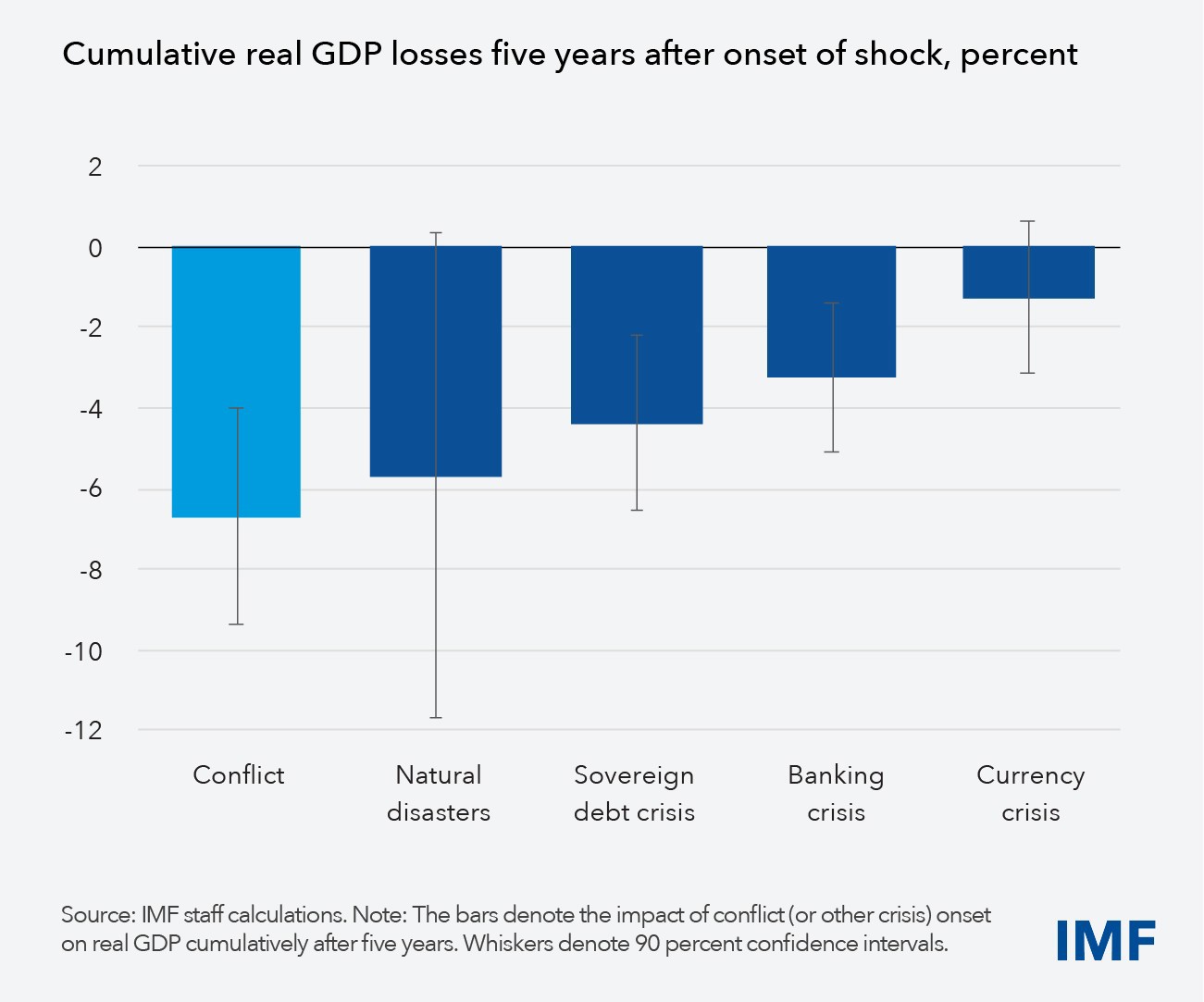
The countries directly affected by conflict suffer long-term
economic scarring, with cumulative output losses reaching around 7% within five
years and lingering effects lasting over a decade.
Meanwhile, neighboring economies and trade partners also
experience negative spillovers, including reduced trade and modest output
declines.
Major conflicts further strain government finances as
spending shifts toward defense while tax revenues collapse.
External balances weaken as exports fall faster than
imports, leading to wider trade deficits. In many cases, governments rely on
foreign aid and remittances to cope, but still face persistent inflation and
financial instability.
The IMF also notes that defense spending increases often lasting about three years and rising by an average of 2.7% of GDP can stimulate economic activity in the short term.
However, these gains are typically limited, especially when funds are spent on imported military equipment. Over time, higher debt levels can crowd out private investment and weaken economic growth.
Recovery after war remains slow and uncertain. Sustained
peace is identified as the most critical factor for economic rebound, alongside
early macroeconomic stabilization, debt restructuring, and strong international
support.
Countries that implement comprehensive reforms to rebuild
institutions and restore confidence are more likely to achieve lasting
recovery.
Without durable peace and carefully designed economic policies, the long-term costs of war both economic and human will continue to weigh heavily on global development.
Copyright Mettis
Link News
Related News
.jpg?width=280&height=140&format=Webp)
| Name | Price/Vol | %Chg/NChg |
|---|---|---|
| KSE100 | 167,089.28 109.91M | -0.21% -352.63 |
| ALLSHR | 101,117.40 308.32M | -0.15% -155.10 |
| KSE30 | 49,841.71 50.59M | -0.28% -142.15 |
| KMI30 | 240,372.43 78.75M | -0.02% -45.72 |
| KMIALLSHR | 65,518.16 188.07M | -0.05% -35.70 |
| BKTi | 46,228.77 7.60M | -0.60% -281.04 |
| OGTi | 33,974.66 4.20M | -0.27% -91.31 |
| Symbol | Bid/Ask | High/Low |
|---|
| Name | Last | High/Low | Chg/%Chg |
|---|---|---|---|
| BITCOIN FUTURES | 83,560.00 | 84,320.00 82,645.00 | 1090.00 1.32% |
| BRENT CRUDE | 104.54 | 0.00 0.00 | -0.18 -0.17% |
| RICHARDS BAY COAL MONTHLY | 128.50 | 0.00 0.00 | 1.00 0.78% |
| ROTTERDAM COAL MONTHLY | 143.40 | 0.00 0.00 | -0.70 -0.49% |
| USD RBD PALM OLEIN | 1,167.50 | 1,167.50 1,167.50 | 0.00 0.00% |
| CRUDE OIL - WTI | 91.66 | 0.00 0.00 | -0.19 -0.21% |
| SUGAR #11 WORLD | 20.27 | 20.44 20.09 | 0.12 0.60% |
Chart of the Day
Latest News
Top 5 things to watch in this week
 PIB Auction
Pakistan Stock Movers
| Name | Last | Chg/%Chg |
|---|
| Name | Last | Chg/%Chg |
|---|