
Pakistan takes the driver’s seat in Middle East crisis
MG News | March 24, 2026 at 10:13 AM GMT+05:00

March 24, 2026 (MLN): Pakistan has moved to the center of the latest Iran–US–Israel crisis, positioning itself as a quiet but unusually important go-between at a moment when the region is edging toward wider war.
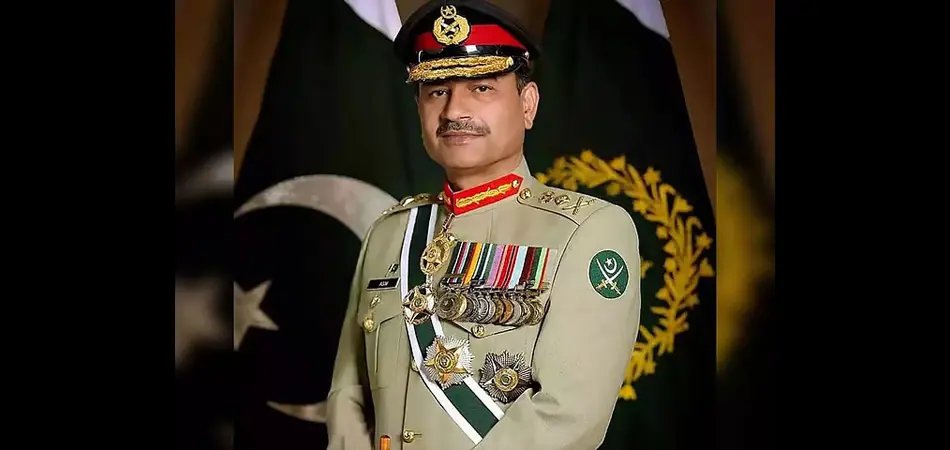
According to the media reports, Field Marshal Asim Munir spoke with US President Donald Trump on March 22, while Prime Minister Shehbaz Sharif spoke with Iranian President Masoud Pezeshkian on March 23, offering Islamabad’s help to lower tensions and open a channel for dialogue.
Pakistan has also said it is ready to host talks if Washington and Tehran agree, which reinforces its role as a possible venue and conduit rather than a front-line combatant.
That mediation push matters because the crisis itself is moving fast. Trump announced a five-day pause on military strikes against Iranian power infrastructure, saying the US and Iran had held “very good and productive conversations,” while also insisting that Tehran must give up enriched uranium as part of any deal.
He separately claimed the two sides were discussing a broader 15-point framework to end the war. Markets reacted immediately: oil fell sharply and equities rose as traders bet on at least a temporary cooling-off period.
But the pause is fragile, not final.
Israel’s strikes on Iran continued, and Trump’s own deadline-driven rhetoric had already pushed the region to the brink before the delay was announced.
Tehran, however, has publicly denied that any direct negotiations are taking place.
Iran’s Foreign Ministry spokesman Esmaeil Baqaei said messages had come through “some friendly countries” carrying a US request for talks, but he rejected the idea that there had been direct US-Iran negotiations in recent weeks.
That wording is important: it suggests the existence of intermediaries, but not a formal process. For Pakistan, that ambiguity is where its leverage lives.
It is one of the few countries that can speak to Washington, Tehran, and Riyadh at the same time, and Iranian officials have left the door slightly open by acknowledging messages through third parties without naming them.
Pakistan’s importance also comes from its relationship with Saudi Arabia. In September 2025, Riyadh and Islamabad signed a mutual defence pact stating that aggression against one would be treated as aggression against both. Since then, the Saudi angle has become impossible to ignore.
Saudi Arabia has already endured Iranian missile attacks in this conflict, and the Saudi defence ministry said it intercepted ballistic missiles aimed at Prince Sultan Air Base.
On March 7, Pakistan’s Army Chief was in Riyadh discussing the attacks and the steps needed to stop them under the mutual defence framework.
That means Islamabad is not just a mediator; it is also a treaty partner facing pressure from a key Gulf ally that expects reassurance, solidarity, and possibly more if the war widens.
At the same time, Pakistan cannot afford to alienate Iran. It shares a long border with Iran, has deep historic, religious, and security sensitivities with its western neighbor, and has repeatedly stressed de-escalation.
Foreign Minister Ishaq Dar said he spoke with Iranian officials and relayed Saudi assurances that Saudi territory would not be used against Iran.
He also said Pakistan has consistently supported Iran’s right to peaceful nuclear energy under international oversight.
Those messages matter because they show Islamabad trying to keep both doors open: one to Riyadh through the defence pact, and one to Tehran through border diplomacy and back-channel reassurance.
The domestic risks for Pakistan are equally serious. The report says the war has already stirred sectarian anger inside Pakistan, especially among Shia communities, where protests and unrest have followed developments in Iran.
Al Jazeera previously noted that Pakistan’s Shia population is large and historically mobilizes around events involving Iran, and that deeper involvement in a regional war could trigger internal instability.
For Islamabad, this is not just foreign policy; it is internal security. A move seen as anti-Iran could provoke unrest at home, while a move seen as too sympathetic to Tehran could upset Gulf partners and complicate the Saudi relationship.
Economically, Pakistan is exposed on both sides. Any prolonged war that drives oil higher, disrupts Gulf economies, or shakes the Strait of Hormuz would hit Pakistan hard because the country depends on imported energy and Gulf remittances.
The report emphasizes that Pakistan’s financial position is tightly tied to the Gulf, where millions of Pakistani workers send money home.
In practical terms, this means Pakistan has every incentive to push for de-escalation quickly: not out of sentiment alone, but because a wider regional war could worsen inflation, weaken the currency, and deepen fiscal strain.
The strategic takeaway is simple: Pakistan matters because it can still talk to everyone.
It has direct access to Trump through Munir’s unusual personal relationship with the US president, it can speak to Tehran through diplomatic and regional channels, and it has a defence relationship with Riyadh that gives it credibility in the Gulf.
The report argues that this combination makes Pakistan one of the few states able to shuttle messages across a broken diplomatic field. But that same position also makes it vulnerable.
If the ceasefire window closes and the conflict escalates again, Pakistan could be forced to choose between its Saudi obligations, its Iranian border realities, and its own domestic stability.
In the end, the report treats Pakistan not as a passive observer but as a balancing state standing on a thin line.
The current five-day pause may be enough to create diplomatic space, or it may simply be a brief interruption before the next strike.
Either way, Islamabad has inserted itself into the middle of one of the most dangerous confrontations in the region, and its ability to stay useful without becoming trapped may determine whether this episode becomes a diplomatic opening or a strategic disaster.
Key Highlights
| Event | Date | Action / Reaction |
|---|---|---|
| Munir calls Trump offering mediation | 22 Mar | Islamabad extends ceasefire proposal |
| PM Sharif calls Iran’s President | 23 Mar | Pushes de-escalation, signals “constructive role” |
| Trump announces 5-day pause | 23 Mar | US strikes delayed, cites productive talks |
| Tehran denies negotiations | 23 Mar | Iranian FM: only “friendly country” messages |
| Domestic unrest | 20–23 Mar | Shia protests in Pakistan; 23 killed in clashes |
Pakistan’s Strategic Ties
| Country | Diplomacy | Military/Defense | Economy | Geography |
|---|---|---|---|---|
| USA | Full relations; US trusts Pakistan as channel | No bases; Army Chief has direct access to Trump | Past aid & trade; nuclear cooperation limited | Strategic interest via Afghanistan |
| Iran | Formal relations; Pakistan hosts Iran’s interests in US | Border security monitored; cooperation on energy | Cross-border trade & labor; pipelines | 900 km porous border; tribal links |
| Saudi Arabia | Strategic ally; 2025 defence pact | 1.5–2k Pakistani troops; joint drills | Loans, oil, remittances | Cultural & religious ties; no land border |
Copyright Mettis Link News
Related News
.png?width=280&height=140&format=Webp)

| Name | Price/Vol | %Chg/NChg |
|---|---|---|
| KSE100 | 167,089.28 109.91M | -0.21% -352.63 |
| ALLSHR | 101,117.40 308.32M | -0.15% -155.10 |
| KSE30 | 49,841.71 50.59M | -0.28% -142.15 |
| KMI30 | 240,372.43 78.75M | -0.02% -45.72 |
| KMIALLSHR | 65,518.16 188.07M | -0.05% -35.70 |
| BKTi | 46,228.77 7.60M | -0.60% -281.04 |
| OGTi | 33,974.66 4.20M | -0.27% -91.31 |
| Symbol | Bid/Ask | High/Low |
|---|
| Name | Last | High/Low | Chg/%Chg |
|---|---|---|---|
| BITCOIN FUTURES | 84,015.00 | 84,015.00 82,645.00 | 1545.00 1.87% |
| BRENT CRUDE | 104.54 | 105.09 102.33 | 0.26 0.25% |
| RICHARDS BAY COAL MONTHLY | 128.50 | 0.00 0.00 | 0.75 0.59% |
| ROTTERDAM COAL MONTHLY | 143.40 | 143.40 143.40 | -1.15 -0.80% |
| USD RBD PALM OLEIN | 1,167.50 | 1,167.50 1,167.50 | 0.00 0.00% |
| CRUDE OIL - WTI | 91.66 | 0.00 0.00 | -0.19 -0.21% |
| SUGAR #11 WORLD | 20.27 | 20.44 20.09 | 0.12 0.60% |
Chart of the Day
Latest News
Top 5 things to watch in this week
 PIB Auction
Pakistan Stock Movers
| Name | Last | Chg/%Chg |
|---|
| Name | Last | Chg/%Chg |
|---|