
Why targeted fuel subsidy is the only fair option
MG News | March 19, 2026 at 12:18 PM GMT+05:00

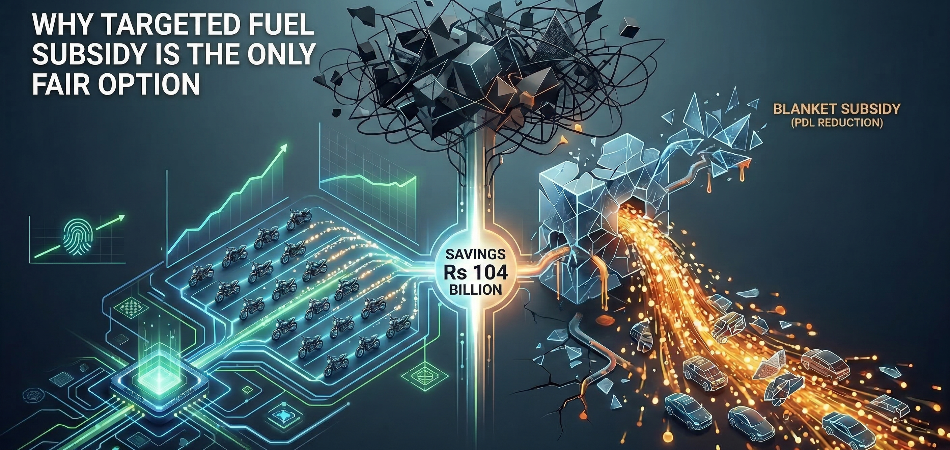
March 19, 2026 (MLN): The Rs104 billion
question facing Pakistan this March is not whether to subsidize fuel, but
how to do it right. Our policy stance is clear: only a targeted subsidy is
the way out.
A blanket approach is inefficient, inequitable, and a relic
of a fiscal era that Pakistan can no longer afford.
As Dubai crude scales $146 per barrel, the conventional urge
to slash the Petroleum Development Levy (PDL) across the board is a fiscal trap
that rewards the wealthy while bleeding the national treasury.
Data derived from economist Ammar Habib’s recent analysis on Substack reveals a staggering inefficiency in blanket subsidies that the
government can no longer afford to ignore.
A blanket subsidy or a horizontal reduction in PDL treats a Rs150,000
commuter motorcycle and a Rs100 million luxury SUV as equals.
This approach is fundamentally inequitable.
Under a universal price cap, a high-consumption vehicle
owner driving a gas-guzzling double-cabin receives a far larger total cash gift
from the state than a plumber or a teacher ferrying children on a 100cc bike.
Subsidizing the "Matcha-drinking" elite to the
tune of Rs120 billion over 90 days is not an economic policy; it is a massive
transfer of wealth from the struggling taxpayer to the ultra-rich.
The only practical and moral way out of this shock is a
targeted subsidy model that leverages Pakistan’s existing digital rails.
By integrating the RAAST payment system with the NADRA CNIC
database and provincial excise registries.
This mechanism
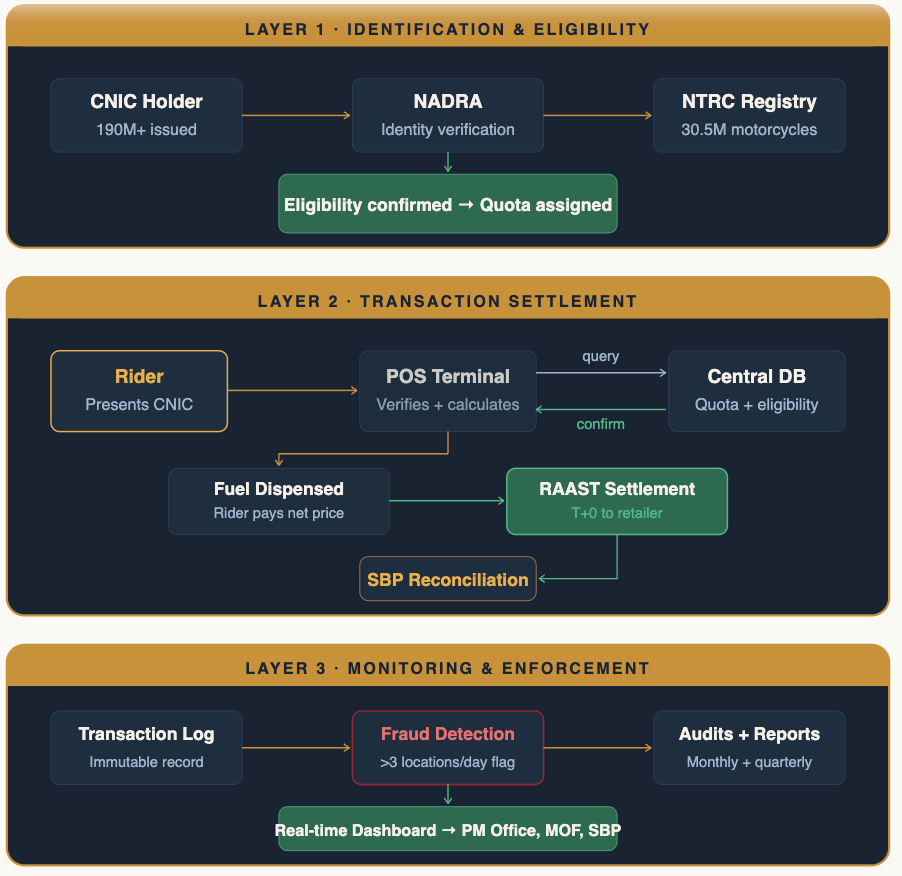
functions through a sophisticated three-layer design.
First, an Identity Layer links the NADRA CNIC database to
vehicle registries to verify the 30.52 million registered motorcycles, that
represent 78% of all vehicles on the road.
This specific demographic represents the true working-class
engine of the country, earning between Rs25,000 and Rs75,000 per month.
These riders consume roughly 25% of the national petrol
supply, meaning a surgical strike on this segment protects the majority of the
population while leaving the luxury segment to absorb market prices.
Second, a Transaction Layer allows a rider to scan a CNIC or
QR code at the pump to instantly query the database on eligibility and
remaining quotas.
Finally, a Fraud Detection Layer uses real-time flags to catch anomalies, such as the same CNIC appearing in two different cities within hours, ensuring the subsidy remains leak-proof.
Source: Ammar Habib, Substack
Unlike the porous fuel voucher schemes of the past, modern
fintech allows for a leak-proof delivery mechanism.
The government can transfer the subsidy amount directly to
the verified beneficiaries through mobile wallets like Easypaisa or JazzCash.
This ensures that the relief reaches the pocket of the rider
rather than being siphoned off by pump owners or black-market middle-men. By
utilizing these mobile platforms, the state can enforce a strict quota for
example, 10 to 15 liters per month ensuring that the subsidy is used for
essential commuting rather than being resold.
It transforms a messy administrative nightmare into a
transparent, T+0 settlement process that maintains fiscal discipline.
The math is undeniable.
A targeted 50% relief for motorcyclists costs approximately Rs175
million per day, totaling Rs15.75 billion over a 90-day window.
This is a fraction of the Rs120 billion required for a
blanket subsidy that would essentially incentivize fuel consumption among those
who can afford the shock. By choosing the targeted route, the government saves
over Rs104 billion in three months precious fiscal space that can prevent a
debt crisis, protect the exchange rate, and stave off secondary rounds of
broad-based inflation.
Pakistan must stop subsidizing luxury during a national crisis. The technology to identify and pay the vulnerable is already in our pockets.
Transitioning to a targeted fuel subsidy via mobile wallets
is the only way to protect the working class while keeping the economy from
stalling. It is time to stop the "spray and pray" fiscal policy and
start using the precision tools we have already built.
Copyright Mettis
Link News
Related News
.png?width=280&height=140&format=Webp)

| Name | Price/Vol | %Chg/NChg |
|---|---|---|
| KSE100 | 167,089.28 109.91M | -0.21% -352.63 |
| ALLSHR | 101,117.40 308.32M | -0.15% -155.10 |
| KSE30 | 49,841.71 50.59M | -0.28% -142.15 |
| KMI30 | 240,372.43 78.75M | -0.02% -45.72 |
| KMIALLSHR | 65,518.16 188.07M | -0.05% -35.70 |
| BKTi | 46,228.77 7.60M | -0.60% -281.04 |
| OGTi | 33,974.66 4.20M | -0.27% -91.31 |
| Symbol | Bid/Ask | High/Low |
|---|
| Name | Last | High/Low | Chg/%Chg |
|---|---|---|---|
| BITCOIN FUTURES | 83,280.00 | 83,320.00 82,645.00 | 810.00 0.98% |
| BRENT CRUDE | 104.54 | 105.09 102.33 | 0.26 0.25% |
| RICHARDS BAY COAL MONTHLY | 128.50 | 0.00 0.00 | 0.75 0.59% |
| ROTTERDAM COAL MONTHLY | 143.40 | 143.40 143.40 | -1.15 -0.80% |
| USD RBD PALM OLEIN | 1,167.50 | 1,167.50 1,167.50 | 0.00 0.00% |
| CRUDE OIL - WTI | 91.66 | 0.00 0.00 | -0.19 -0.21% |
| SUGAR #11 WORLD | 20.27 | 20.44 20.09 | 0.12 0.60% |
Chart of the Day
Latest News
Top 5 things to watch in this week
 PIB Auction
Pakistan Stock Movers
| Name | Last | Chg/%Chg |
|---|
| Name | Last | Chg/%Chg |
|---|