
Was Investor Ready for T+1?
MG News | March 03, 2026 at 07:24 PM GMT+05:00

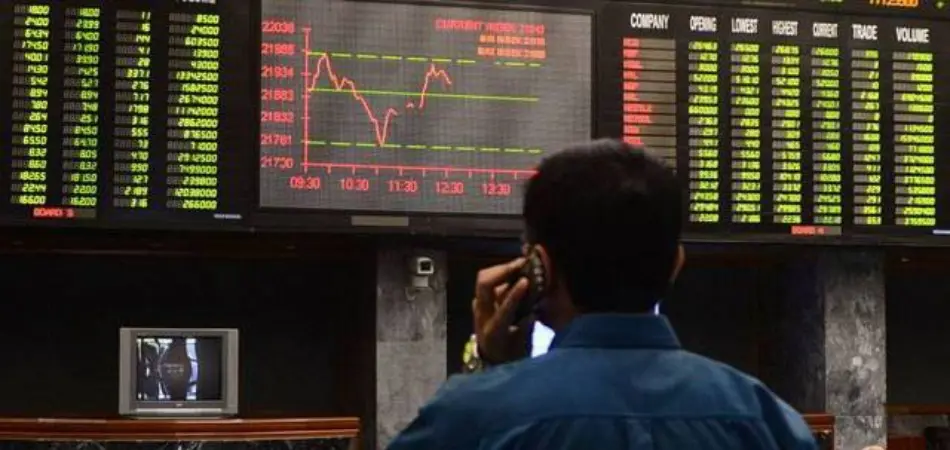
March 03, 2026 (MLN): It was a day of nerves at the Pakistan Stock Exchange. Investors watched the KSE-100 swing wildly, foreign funds were heading for the exits, and brokers scrambled to process payments that, under the new rules, had to settle the very next day.
What should have been a step toward efficiency,
the introduction of T+1 settlement, is instead adding fuel to an already raging
fire.
T+1, which requires trades executed on “T” day to settle on
“T+1,” aims to reduce counterparty risk and free up capital. Globally, shorter
settlement cycles are considered best practice, and the reform itself is sound.
But in Pakistan, the move collided head-on with an infrastructure mismatch.
The market still relies heavily on cheque-based transactions, and banking hours are limited, particularly during the holy month of Ramadan, when both trading sessions and bank timings are shortened.
When
investors issue cheques late in the day, brokers often find themselves holding
the bag, bridging funding gaps while payments remain pending.
Timing, as they say, is everything. The PSX is navigating
volatile swings, elevated geopolitical risk premiums, and foreign portfolio
outflows. In this environment, liquidity, not speed, is king.
Accelerating settlement without aligning banking operations
risks tightening cash flows at the worst possible moment, leaving brokers and
investors between a rock and a hard place.
India’s experience offers a cautionary tale and a
roadmap. The Securities and Exchange Board of India rolled out T+1 in carefully
calibrated phases:
- February
25, 2022: The first batch included the bottom 100 stocks by average
daily market capitalization, effectively starting with smaller, less
liquid names.
- March–December
2022: Each month, the next 500 stocks were added on the last Friday of
the month.
- January
27, 2023: All remaining securities, including blue-chip large caps,
ETFs, REITs, InvITs, and debt instruments, moved to T+1.
Both the National Stock Exchange of India and Bombay Stock Exchange coordinated the rollout to avoid market fragmentation. Related instruments, preference shares, warrants, and rights entitlements, followed the same schedule as parent securities.
By rolling out in stages, India allowed
brokers, banks, and custodians to adapt gradually, avoiding operational shocks.
At PSX, by contrast, the T+1 rollout was implemented across
all scrips at once. Cheque processing and banking cut-offs could not keep pace
with compressed timelines.
Brokers face funding pressure, investors risk delayed
transfers, and market participation suffers, all while volatility runs high. A
classic case of “biting off more than you can chew.”
In
exclusive conversations with Mettis Global, several seasoned and high-net-worth
investors expressed concern over operational challenges emerging after the
shift to T+1 settlement at the Pakistan Stock Exchange.
While
acknowledging that shorter settlement cycles are globally recognized as
progressive reform, investors say the timing and execution have created
friction in an already volatile market.
“One-day
settlement works when the entire ecosystem is digitized,” said a portfolio
investor with over two decades of market experience. “In our case, cheque-based
transactions and banking cut-offs are not aligned with compressed timelines.
That creates unnecessary pressure.”
Another
high-net-worth investor noted that liquidity flexibility has reduced. “Earlier,
T+2 gave breathing space for fund management. Now, capital must be positioned
almost immediately. In volatile sessions, that’s not always practical.”
“The
reform is not the problem,” one investor summarized. “The pace is.”
Recommendations
- To prevent T+1 from
becoming a double-edged sword, authorities should consider extended cut-off
times or create a dedicated settlement window to ensure same-day processing is
possible.
- In addition, encourage
real-time fund transfers to replace cheque dependency, cutting delays and
systemic risk.
- Also, introduce short-term
buffers during high-volatility periods to prevent brokers from being caught
flat-footed.
- Even after rollout, pilot
T+1 on select scrips to identify operational gaps before scaling market-wide.
Bottom Line
T+1 is a step in the right direction, but execution is
everything. India’s phased approach shows that modernization need not come at
the cost of market stability.
For PSX, aligning infrastructure and adopting a more gradual
transition may be the key to turning reform into a win rather than a headache.
In
the immediate term, authorities should consider temporarily rolling back the
blanket T+1 implementation and reintroducing it in calibrated phases. A staged
rollout beginning with select scrips and expanding systematically would allow
banking systems, brokers, and investors to adjust without destabilizing
liquidity.
After
all, a stitch in time saves nine. In today’s volatile market, sequencing reform
carefully may prove far more valuable than pushing ahead at full speed.
Copyright Mettis Link News
Related News


| Name | Price/Vol | %Chg/NChg |
|---|---|---|
| KSE100 | 166,604.16 63.69M | 0.11% 184.45 |
| ALLSHR | 101,035.64 192.26M | 0.16% 163.73 |
| KSE30 | 49,420.07 23.42M | 0.21% 103.41 |
| KMI30 | 240,398.74 45.26M | 0.20% 491.14 |
| KMIALLSHR | 65,543.14 116.79M | 0.11% 69.45 |
| BKTi | 45,973.47 3.89M | 0.27% 124.19 |
| OGTi | 33,685.73 1.37M | 0.49% 162.71 |
| Symbol | Bid/Ask | High/Low |
|---|
| Name | Last | High/Low | Chg/%Chg |
|---|---|---|---|
| BITCOIN FUTURES | 82,860.00 | 82,940.00 80,700.00 | 1260.00 1.54% |
| BRENT CRUDE | 107.25 | 109.65 107.17 | -2.61 -2.38% |
| RICHARDS BAY COAL MONTHLY | 128.50 | 0.00 0.00 | -1.05 -0.81% |
| ROTTERDAM COAL MONTHLY | 145.10 | 0.00 0.00 | -0.55 -0.38% |
| USD RBD PALM OLEIN | 1,167.50 | 1,167.50 1,167.50 | 0.00 0.00% |
| CRUDE OIL - WTI | 96.94 | 99.24 96.90 | -2.08 -2.10% |
| SUGAR #11 WORLD | 20.85 | 0.00 0.00 | 0.00 0.00% |
Chart of the Day
Latest News
Top 5 things to watch in this week
Pakistan Stock Movers
| Name | Last | Chg/%Chg |
|---|
| Name | Last | Chg/%Chg |
|---|