
Pakistan eyes $1–2bn return to global capital markets
MG News | August 25, 2026 at 02:35 PM GMT+05:00

August 25, 2026 (MLN): Pakistan is seeking to strengthen its access to international financing through closer economic engagement with the United States while preparing to return to global capital markets with borrowing of between $1 billion and $2bn during the current fiscal year.
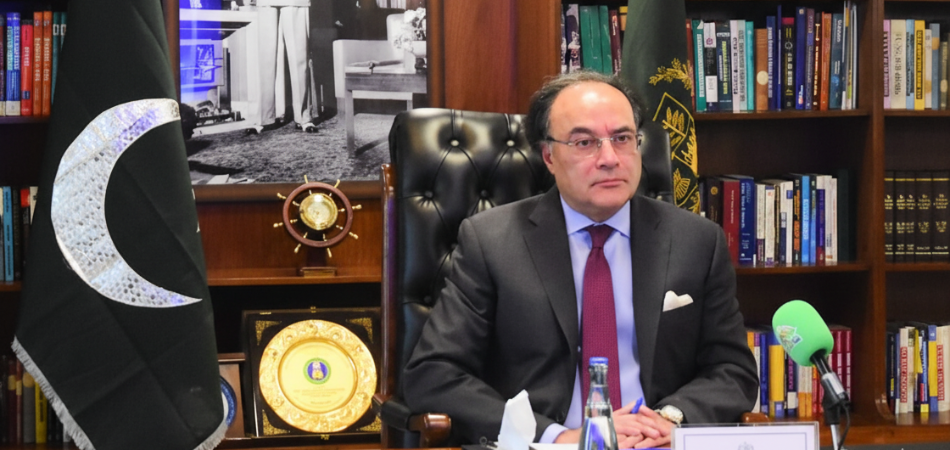
Finance Minister Muhammad Aurangzeb said a proposed
$10bn swap line with the US could serve as a confidence signal for
international investors as Pakistan prepares to resume borrowing from global
debt markets, according to Financial Times.
The government has received constructive engagement from
Washington regarding the proposed swap arrangement and expects greater clarity
over the coming months.
Muhammad Aurangzeb said Pakistan's engagement with
the US is primarily focused on expanding trade and investment flows while also
strengthening investor confidence in the country's planned return to
international capital markets.
He added that the US Export-Import Bank and the US
International Development Finance Corporation could play an important role in
supporting Pakistan's economic and investment agenda, with both institutions
potentially helping mobilize private investment.
The government's broader strategy marks a shift toward
diversifying Pakistan's external financing sources after years of significant
reliance on official and bilateral lenders, particularly China.
Pakistan has been working to stabilize its economy under a
$7bn, three-year International Monetary Fund programme approved in 2024. The
country has reduced fiscal deficits, brought inflation down and rebuilt foreign
exchange reserves.
However, economic growth remains insufficient to meet the
needs of Pakistan's rapidly expanding population, while poverty levels have
also increased. The government estimates GDP growth at 3.7% for FY26.
Muhammad Aurangzeb said Pakistan needs to move away
from consumption-driven growth and focus more strongly on exports to avoid
recurring balance-of-payments pressures.
Pakistan's trade deficit widened to a four-year high of
$39.5bn in FY26, while exports declined.
The finance minister noted that periods of rapid
liquidity-driven and consumption-led expansion have historically increased
imports and quickly created external financing pressures because of Pakistan's
dependence on imported goods.
The government is therefore maintaining a close watch on
domestic demand while pursuing a more sustainable, export-led growth model.
Muhammad Aurangzeb, who previously held senior
positions at Citibank and JPMorgan and also served as chief executive of Habib
Bank, said the government's broader objective is to shift Pakistan's economy
from reliance on aid toward greater trade and investment.
The US ExIm Bank could potentially finance Boeing aircraft
sales to Pakistan International Airlines following the airline's privatization
and support US companies involved in upgrading Pakistan's oil refineries.
Meanwhile, the DFC could participate through equity
investments in Pakistani conglomerates, potentially supporting greater
private-sector investment.
Pakistan is seeking to expand economic cooperation with the
United States while maintaining its longstanding relationship with China.
The government's efforts come amid stronger political
engagement between Islamabad and Washington, including close ties developed
between Field Marshal Asim Munir and US President Donald Trump, as well as
Pakistan's involvement in facilitating diplomatic engagement concerning Iran.
Muhammad Aurangzeb maintained that stronger ties with
Washington should not be viewed as a choice between the US and China,
describing Pakistan's engagement with the two countries as not an either-or
proposition.
China remains Pakistan's largest bilateral creditor,
accounting for around 23% of the country's $129.7bn in total outstanding
external debt as of 2024, according to World Bank data.
However, Muhammad Aurangzeb confirmed that Pakistan
is not currently seeking additional financing from China as the government
looks to diversify its sources of external funding.
As part of its planned return to international borrowing,
Pakistan last month appointed separate banking consortiums under three-year
mandates to arrange potential Eurobond, Islamic sukuk and rupee-denominated,
dollar-settled bond issuances.
Standard Chartered and Citi are members of all three
consortiums.
Muhammad Aurangzeb said the timing and size of any
Eurobond issuance would depend on market conditions, pricing and the maturity
available to Pakistan. However, the government is considering between $1bn and
$2bn in international market borrowing during the current fiscal year.
A fourth consortium is also planned for the issuance of $750
million in renminbi-denominated panda bonds, providing Pakistan with access to
China's domestic capital market.
Muhammad Aurangzeb described the planned panda bond
as particularly significant given the size and depth of China's capital
markets.
The proposed return to global debt markets represents an
important step in Pakistan's efforts to diversify its external financing and
gradually reduce dependence on bilateral and official creditors.
Pakistan is also working toward further improvements in its
sovereign credit ratings to reduce borrowing costs and broaden its access to
international investors.
S&P Global Ratings upgraded Pakistan's sovereign rating
to B last month, placing it five notches below investment grade. Fitch Ratings
currently rates Pakistan at B-minus with a stable outlook.
Muhammad Aurangzeb said the government is working
with rating agencies to improve the country's rating to B-plus over the next 12
months.
However, Pakistan's longer-term objective is to move toward
the double-B category, supported by continued fiscal consolidation, stronger
foreign exchange reserves, improved external balances and greater access to
private capital.
The government hopes these measures will support a
transition toward more sustainable, market-based financing while strengthening
investment, trade and export-led economic growth.
Copyright Mettis Link News
Related News


| Name | Price/Vol | %Chg/NChg |
|---|---|---|
| KSE100 | 171,153.17 162.52M | 0.16% 268.58 |
| ALLSHR | 103,477.03 691.59M | 0.17% 179.80 |
| KSE30 | 50,901.99 58.56M | 0.04% 18.99 |
| KMI30 | 243,765.66 75.35M | 0.26% 626.41 |
| KMIALLSHR | 67,087.03 368.61M | 0.16% 107.81 |
| BKTi | 47,614.72 15.03M | -0.06% -27.39 |
| OGTi | 34,853.92 4.57M | -0.80% -282.58 |
| Symbol | Bid/Ask | High/Low |
|---|
| Name | Last | High/Low | Chg/%Chg |
|---|---|---|---|
| BITCOIN FUTURES | 85,740.00 | 86,950.00 85,385.00 | -850.00 -0.98% |
| BRENT CRUDE | 101.02 | 101.17 100.22 | 0.68 0.68% |
| RICHARDS BAY COAL MONTHLY | 130.00 | 0.00 0.00 | 6.10 4.92% |
| ROTTERDAM COAL MONTHLY | 138.50 | 0.00 0.00 | 1.45 1.06% |
| USD RBD PALM OLEIN | 1,228.00 | 1,228.00 1,228.00 | 0.00 0.00% |
| CRUDE OIL - WTI | 92.85 | 92.99 91.75 | 0.48 0.52% |
| SUGAR #11 WORLD | 18.38 | 18.60 18.15 | 0.14 0.77% |
Chart of the Day
Latest News
Top 5 things to watch in this week
Pakistan Stock Movers
| Name | Last | Chg/%Chg |
|---|
| Name | Last | Chg/%Chg |
|---|