
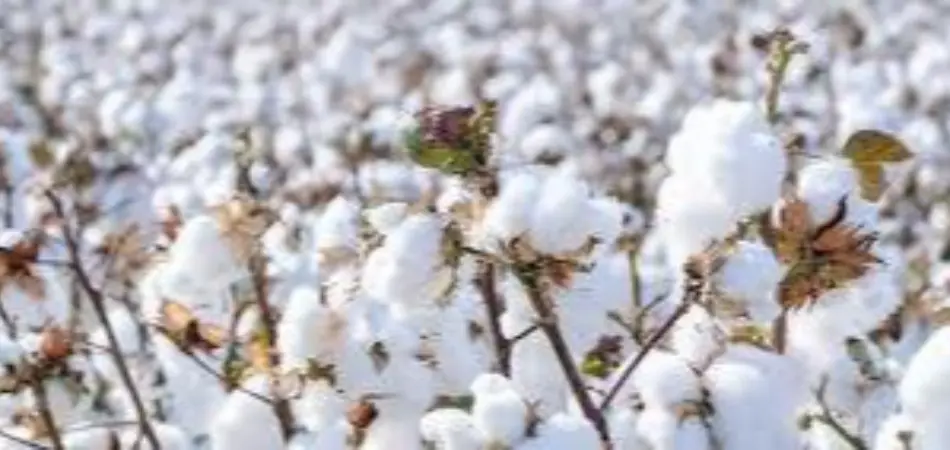
Cotton output collapse costing Pakistan $2-3bn annually
MG News | July 22, 2026 at 12:23 PM GMT+05:00

July 22, 2026 (MLN): Pakistan's cotton production has more than halved from
its historic peak, a slump that is now draining the economy of an estimated
$2-3bn every year through higher import bills and forgone export revenue.
The report, titled Seeds of Growth, by the Overseas Investors
Chamber of Commerce and Industry (OICCI), draws on input from leading OICCI
member firms in the agriculture sector.
It argues that the real drag on Pakistan's farm output which contributes
roughly 23% to GDP and sustains 37% of the workforce is not weak technology or thin investment but
regulatory delay and policy inconsistency, leaving the country trailing
regional peers.
Cotton production has slid from a peak of around 14 million bales to an
estimated 6.85mn bales in 2025-26, missing the government's own 10mn-bale
target by 34%.
The report traces the decline to climate shocks, pest attacks,
substandard seed quality, and a ban on certain pesticide ingredients that was
rolled out without a science-based transition plan.
Given that the textile sector source of 60% of the country's export earnings
depends heavily on domestic cotton, the report says lifting output back to
8-9mn bales would take meaningful pressure off foreign exchange reserves.
Maize tells a similar story, the report notes.
Hybrid seed varieties have already tripled per-acre yields over the past
three decades, yet the National Biotechnology Policy cleared by the federal
cabinet just last month is still awaiting implementation.
That delay, the report says, is holding back biotech corn hybrids that
could otherwise unlock a potential USD billion in maize grain and silage
exports.
OICCI Secretary General M. Abdul Aleem credited the cabinet for clearing
the biotech policy but stressed that its real-world impact hinges on what comes
next.
He noted the cabinet's move on biotech maize marks genuine progress,
though the yield gains, the export potential, and the investor confidence
the policy is meant to unlock remain on paper until it is formally notified
and rolled out.
He described this gap between policy direction and implementation speed
as a recurring theme across the report, adding that the direction of policy
is often right; it is the pace of execution that is costing this sector
billions, according to a press release issued.
Beyond cotton and maize, the report points to structural weaknesses
across potato, dairy and tobacco.
Certified processing-grade seed accounts for less than 5% of potato
output, it says, leaving average yields stuck at 20-23 tonnes per hectare
against 30-35 tonnes achieved elsewhere.
In dairy, a sector where Pakistan ranks among the world's top five
producers only 10% of milk is processed,
and roughly 20% of total output is lost to inadequate cold-chain
infrastructure.
Tobacco, meanwhile, has seen production costs more than double over three
years, while an undocumented segment of the industry, concentrated in Khyber
Pakhtunkhwa and Azad Jammu and Kashmir, continues to operate outside the tax
net.
On fertilizer use, the report flags that nitrogen-heavy urea still
dominates farmer application, while potash offtake critical for balanced soil nutrition
stood at just 7,000 tonnes in March, despite climbing nearly 40% year-on-year.
The report links these shortfalls directly to Pakistan's ability to hold
onto foreign investment, noting that OICCI member companies have already
introduced international best practices including seed technology, crop
protection tools and precision farming systems that are not otherwise available
domestically.
It cautions that further investment will hinge on whether the regulatory
environment becomes more predictable.
Among its recommendations, the report calls for time-bound approval
processes for seed varieties and pesticide registration, a national strategy to
cut post-harvest losses, a dedicated enforcement unit to tackle seed
counterfeiting, and wider credit access for smallholder farmers, who make up
close to 90% of landholders with under 12 acres.
Copyright Mettis Link News
Related News
| Name | Price/Vol | %Chg/NChg |
|---|---|---|
| KSE100 | 171,402.08 123.44M | 0.15% 248.92 |
| ALLSHR | 103,762.74 640.45M | 0.28% 285.71 |
| KSE30 | 50,998.57 52.62M | 0.19% 96.59 |
| KMI30 | 244,665.18 69.20M | 0.37% 899.52 |
| KMIALLSHR | 67,290.94 377.69M | 0.30% 203.90 |
| BKTi | 47,479.22 9.62M | -0.28% -135.50 |
| OGTi | 35,149.09 4.24M | 0.85% 295.17 |
| Symbol | Bid/Ask | High/Low |
|---|
| Name | Last | High/Low | Chg/%Chg |
|---|---|---|---|
| BITCOIN FUTURES | 86,215.00 | 86,950.00 85,195.00 | -375.00 -0.43% |
| BRENT CRUDE | 99.59 | 102.30 97.43 | -0.75 -0.75% |
| RICHARDS BAY COAL MONTHLY | 130.00 | 0.00 0.00 | 6.10 4.92% |
| ROTTERDAM COAL MONTHLY | 137.10 | 137.10 137.10 | -0.20 -0.15% |
| USD RBD PALM OLEIN | 1,228.00 | 1,228.00 1,228.00 | 0.00 0.00% |
| CRUDE OIL - WTI | 90.96 | 93.84 89.16 | -1.41 -1.53% |
| SUGAR #11 WORLD | 18.55 | 18.57 18.02 | 0.16 0.87% |
Chart of the Day
Latest News
Top 5 things to watch in this week
 Disbursement Report of Foreign Economic Assistance
Pakistan Stock Movers
| Name | Last | Chg/%Chg |
|---|
| Name | Last | Chg/%Chg |
|---|