
SBP backs urban agriculture to tackle Pakistan’s food and heat crisis
MG News | August 19, 2026 at 10:55 AM GMT+05:00

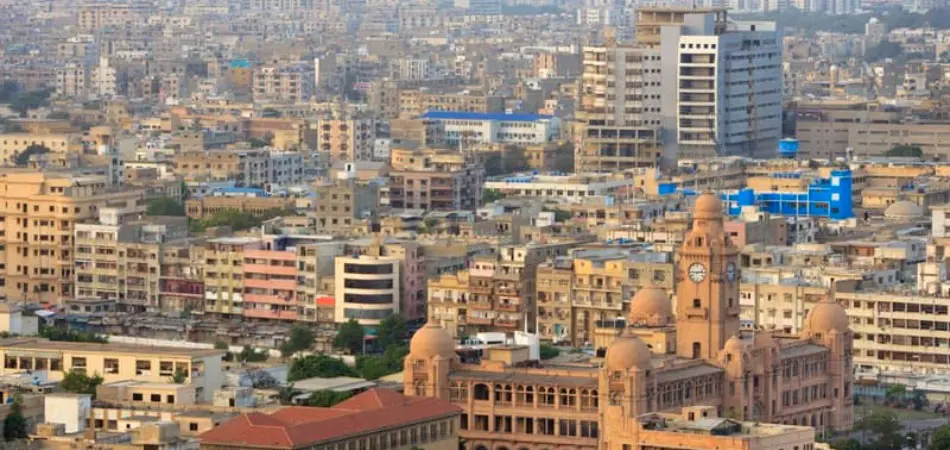
August 19, 2026 (MLN): As Pakistan grapples with rapid urbanization and escalating climate challenges, integrating Urban Agriculture (UA) into urban planning has emerged as a vital pathway to secure food supplies and cool down concrete-laden cities.
According to the State Bank of Pakistan's (SBP) Half Year
Economic Report, the convergence of shrinking arable land, population growth,
and rising urban temperatures has elevated the risks of food insecurity and
localized heat stress across the country.
In dense metropolises such as Karachi, Lahore, and
Faisalabad, extensive concrete structures have exacerbated the "urban heat
island effect," trapping heat and driving up temperatures.
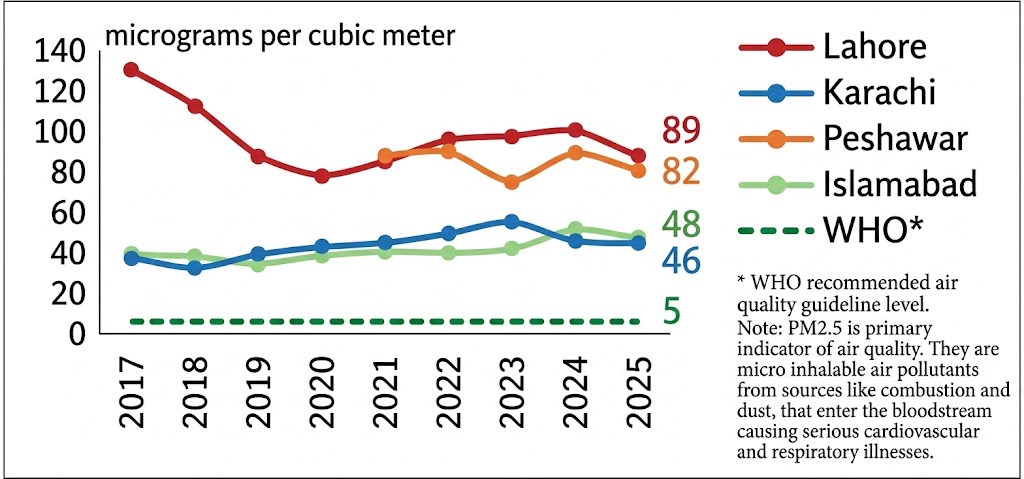
This comes as Pakistan is ranked as the most polluted
country globally, with hazardous PM2.5 levels regularly exceeding acceptable
health standards in major hubs.
To combat these overlapping environmental crises, SBP
analysts advocate for a structural transition toward localized, circular food
systems.
UA offers a comprehensive solution by reducing "food
miles," recycling municipal waste, creating green employment, and
improving urban microclimates.
Global precedents demonstrate that successful UA integration
hinges on policy continuity and community ownership. For instance, Cuba's
decentralized land usufruct management allows Havana's urban gardens to produce
90% of the city's annual fruit and vegetable consumption.
Similarly, in Nairobi, Kenya, regulatory reforms have
enabled UA to supply 60% of leafy vegetables and 70 percent of milk and poultry
consumed in the city.
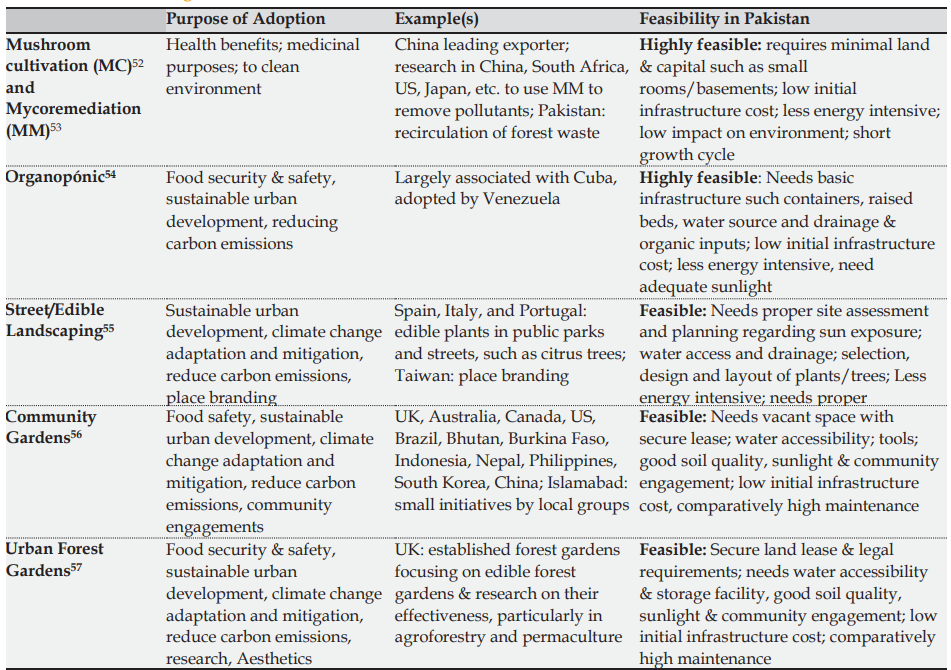
For Pakistan, the report highlights several highly feasible
models. Rooftop gardening, container farming, and organoponics raised-bed
systems using organic substrates are highly adaptable to dense areas.
Low-capital methods like basement mushroom cultivation
require minimal space and energy while yielding rapid growth cycles. Other
viable options include community gardens on vacant plots and edible landscaping
along public streets.
However, widespread adoption is currently stalled by policy
bottlenecks in Pakistan. While provincial Urban Forest Policies exist in Punjab
and Khyber Pakhtunkhwa, their implementation remains weak and isolated.
True progress requires institutional coordination between
urban planners, agricultural experts, and local communities.
The SBP recommends that municipal authorities integrate UA
into formal planning frameworks, rent out unutilized public spaces to
cooperatives, and establish public extension services to train citizens.
Greening Pakistan's cities is no longer a luxury it is an
economic and survival planning imperative
Copyright Mettis Link News
Related News

_20260101112329999_0153db.webp?width=280&height=140&format=Webp)

| Name | Price/Vol | %Chg/NChg |
|---|---|---|
| KSE100 | 163,924.32 118.89M | -1.21% -2006.67 |
| ALLSHR | 99,526.88 364.30M | -1.08% -1083.61 |
| KSE30 | 48,313.81 50.96M | -1.53% -750.07 |
| KMI30 | 235,637.18 55.46M | -1.36% -3247.37 |
| KMIALLSHR | 64,683.09 191.88M | -0.90% -587.30 |
| BKTi | 45,181.21 14.21M | -1.56% -715.82 |
| OGTi | 33,395.61 3.57M | -0.82% -277.39 |
| Symbol | Bid/Ask | High/Low |
|---|
| Name | Last | High/Low | Chg/%Chg |
|---|---|---|---|
| BITCOIN FUTURES | 81,340.00 | 84,945.00 80,845.00 | -3275.00 -3.87% |
| BRENT CRUDE | 113.04 | 113.50 109.81 | 4.22 3.88% |
| RICHARDS BAY COAL MONTHLY | 128.50 | 0.00 0.00 | -1.55 -1.19% |
| ROTTERDAM COAL MONTHLY | 147.10 | 0.00 0.00 | 1.80 1.24% |
| USD RBD PALM OLEIN | 1,167.50 | 1,167.50 1,167.50 | 0.00 0.00% |
| CRUDE OIL - WTI | 99.24 | 100.17 97.72 | 2.09 2.15% |
| SUGAR #11 WORLD | 20.13 | 20.64 20.10 | -0.32 -1.56% |
Chart of the Day
Latest News
Top 5 things to watch in this week
 Repatriation of Profit and Dividend
Pakistan Stock Movers
| Name | Last | Chg/%Chg |
|---|
| Name | Last | Chg/%Chg |
|---|