


March 03, 2026 (MLN): The KSE-100 Index staged a notable recovery as Tuesday starts off, rebounding sharply after Monday’s big collapse as investors cautiously returned to the market amid signs of short-term stabilization.
The benchmark index is at 155,442.94, posting a gain of 3,469.95 points or 2.28%.
The index was last seen trading within a range of 4,320.25 points, touching an intraday high of 155,579.10 (+3,606.11 points) and a low of 151,258.85 (-714.14 points), reflecting volatile but largely positive momentum throughout the session.
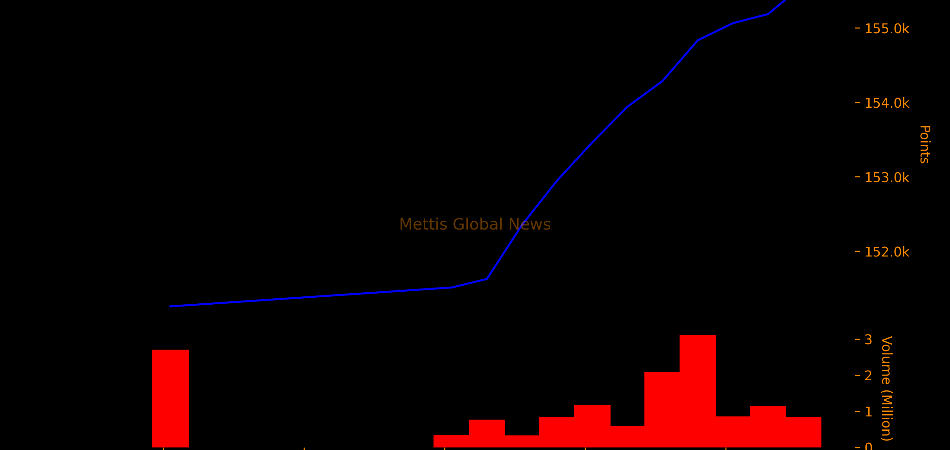
The rebound comes a day after the benchmark plunged over 16,000 points in one of the steepest single-session declines in market history, triggered by escalating geopolitical tensions and widespread liquidation.
Tuesday’s opening recovery appeared driven by bargain hunting in heavily beaten-down blue-chip stocks, particularly in banking, fertilizer, and energy sectors.
However, the relatively thin volumes suggest that investors remain cautious despite the bounce.
Market breadth improved notably, with 57 of the 100 index companies trading higher, 30 declining, 3 remaining unchanged, and 10 staying untraded.
Top gainers included YOUW (+16.82%), KEL (+5.97%), CNERGY (+5.41%), LUCK (+5.18%), and PPL (+5.09%).
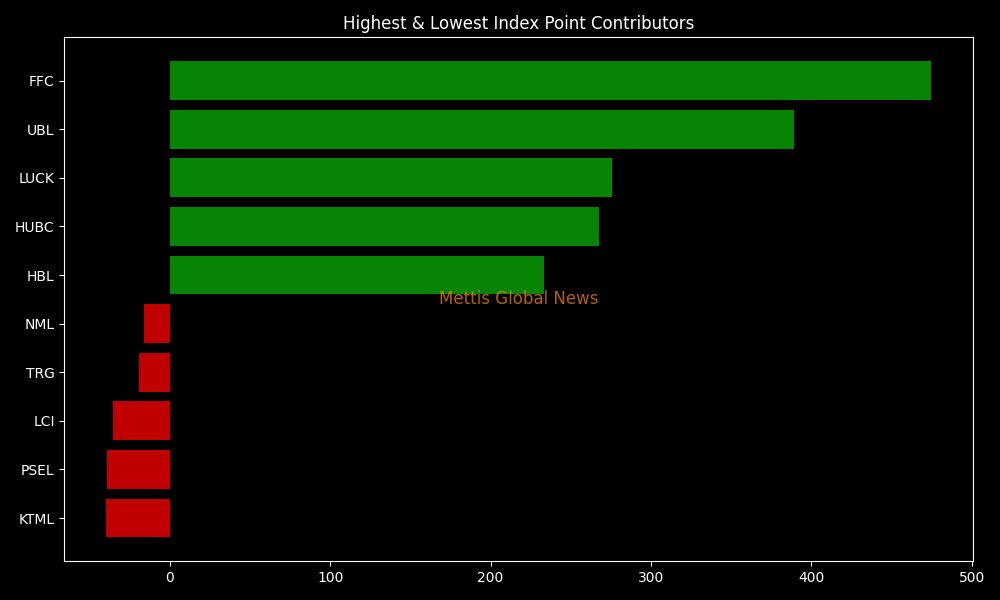
In terms of index-point contribution, major support came from FFC (+474.89pts), UBL (+389.14pts), LUCK (+275.58pts), HUBC (+267.45pts), and HBL (+233.28pts).
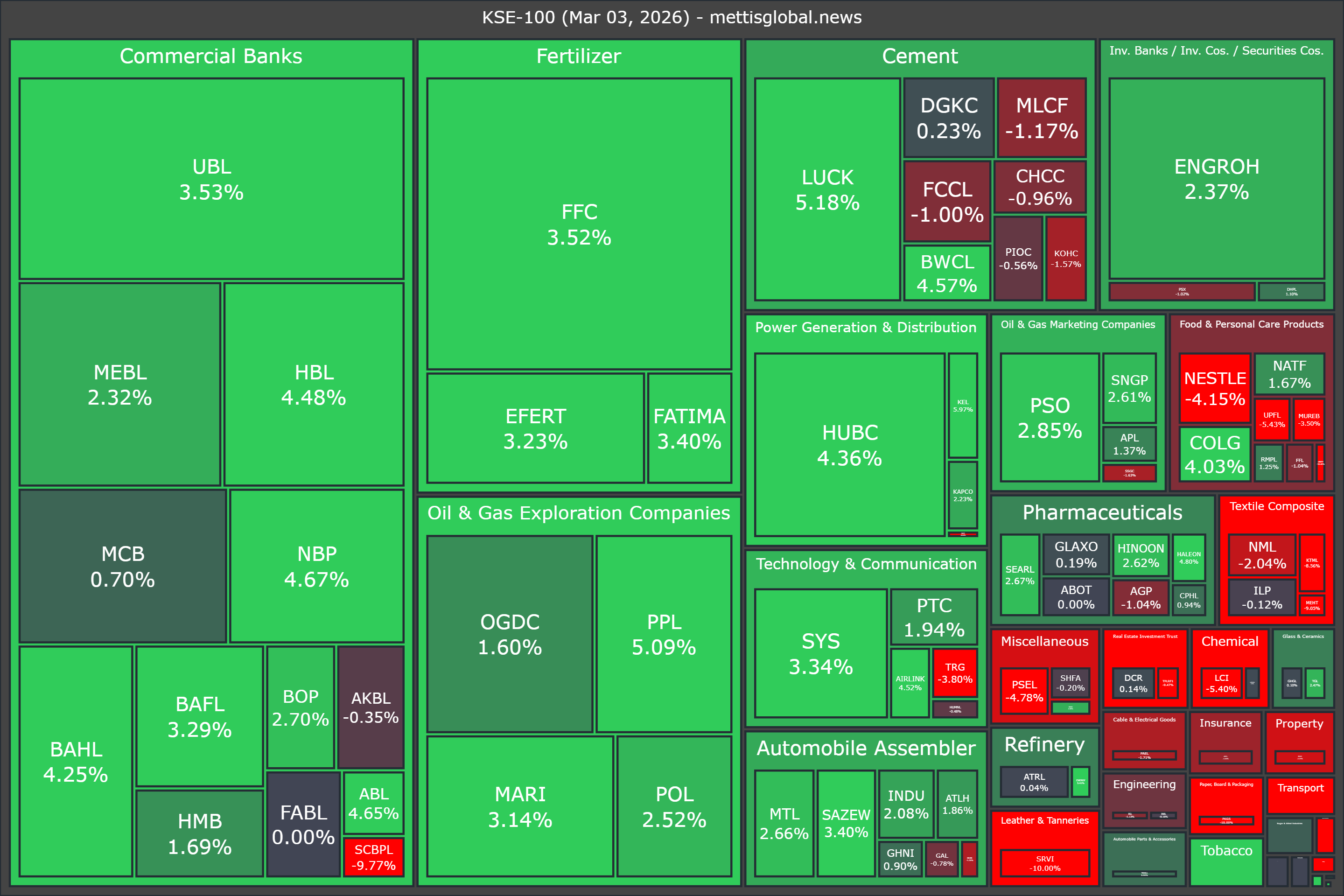
Sector-wise, the KSE-100 Index was primarily supported by Commercial Banks (+1,302.05pts), Fertilizer (+645.25pts), Oil & Gas Exploration Companies (+491.01pts), Power Generation & Distribution (+307.27pts), and Cement (+266.35pts).
Similarly, in the United States, major indices also managed to recover late losses.
The S&P 500 edged slightly higher by 0.04% after bouncing back toward the end of the session, while the Nasdaq Composite gained 0.36%, reversing an earlier drop of around 1.6%, signaling some stabilization in global risk sentiment.
Previously, markets came under pressure as geopolitical tensions in the Middle East intensified, with the conflict involving Iran and the United States.
Energy markets reacted sharply after reports indicated that Tehran had shut down the strategic Strait of Hormuz a critical artery for global oil shipments.
The development fueled fresh supply concerns and pushed crude benchmarks higher.
Copyright Mettis Link News

_20261009161631180_9d2ce0.jpeg?width=280&height=140&format=Webp)
_20260518072716198_9300ef.jpeg?width=280&height=140&format=Webp)
 PIB Auction