
Hormuz crisis sends oil higher, raises global inflation fears
MG News | March 08, 2026 at 07:38 PM GMT+05:00

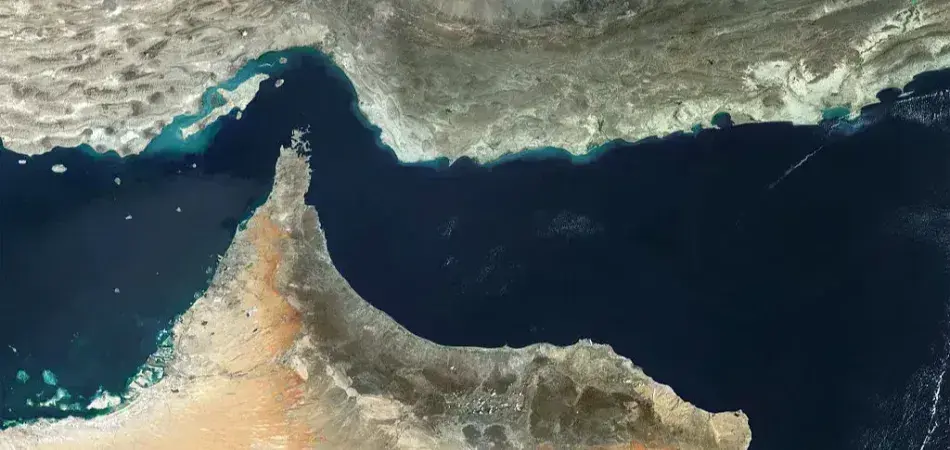
March 08, 2026 (MLN): The escalation of conflict involving Iran has triggered significant volatility in global energy markets after military strikes and retaliatory actions effectively disrupted shipping through the Strait of Hormuz, one of the world’s most critical energy chokepoints.
The waterway typically handles nearly one-fifth of global oil supply and roughly 20% of liquefied natural gas (LNG) trade, making any disruption a major shock to global energy markets.
Following the escalation, oil prices surged past $85 per barrel, rising sharply from the pre-war range of $65–70, while LNG prices climbed to around €51/MWh from €30–35/MWh, reflecting mounting concerns over supply disruptions and global energy security.
Economists note that the initial price reaction has been
significant but still below the potential levels implied by a prolonged
disruption.
Energy demand and supply are highly inelastic in the short
term, meaning consumers cannot easily reduce usage and producers cannot quickly
ramp up output.
Academic estimates suggest that every 1% decline in global
oil supply can push prices higher by 3–8%, implying that a severe supply
shock could drive oil prices as high as $120 per barrel if the
disruption continues.
The fact that prices have not yet reached those levels
suggests that markets are currently pricing in a temporary disturbance rather
than a long-term blockade.
In the base-case outlook, the disruption is expected
to be short-lived, with shipping through the Strait of Hormuz
potentially resuming by the end of March.
Under this scenario, oil prices may remain elevated near
current levels through the near term before easing back toward pre-conflict
levels by the third quarter of 2026.
Inflation would experience only a modest bump around 0.3%
points in the Eurozone while economic growth would face only minor
downgrades. Overall economic activity would largely normalize by mid-year,
according to analysis from Berenberg.
However, the adverse scenario presents a far more
disruptive outcome. If the strait remains blocked for several months, oil
prices could spike toward $120 per barrel while LNG prices could
approach €90/MWh during the summer months.
Such a prolonged supply shock could trigger renewed stagflation
risks in Europe, where economies remain highly dependent on imported
energy.
Inflation could climb toward 4%, while economic
growth could weaken sharply, leaving policymakers in a difficult position
between controlling inflation and supporting growth.
These projections and risks are highlighted in the latest
economic outlook published by Berenberg Bank.
The Eurozone would likely be among the regions most
vulnerable to a prolonged disruption. In the benign scenario, economic growth
would slow modestly from 1.3% to around 1.1%, with inflation rising
slightly to about 2.1%.
However, under the prolonged disruption scenario, growth
could drop to around 0.7% while inflation accelerates toward 4%,
placing the European Central Bank in a classic policy dilemma where high
inflation limits the ability to cut interest rates despite weakening economic
activity.
In the United Kingdom, the conflict could delay the
anticipated easing cycle of monetary policy.
Rising fuel costs would feed into inflation relatively
quickly, while household energy bills would increase later due to the lagged
pricing mechanism of the Office of Gas and Electricity Markets price cap
system.
In a prolonged disruption scenario, inflation could remain
around 3% throughout 2026, forcing the Bank of England to
postpone rate cuts until much later than previously expected, potentially
delaying meaningful economic recovery until 2028.
The United States, by contrast, is relatively better
positioned due to its status as a net energy exporter. The direct growth impact
is expected to remain limited, though inflation risks could increase if higher
energy prices persist.
Rising energy costs combined with tight labour markets and
fiscal stimulus could push inflation toward 4%, complicating the policy
outlook for the Federal Reserve, which may face pressure between
maintaining price stability and avoiding further economic tightening.
Currency markets have already begun reacting to the
geopolitical shock, with the US dollar strengthening as investors seek
safe-haven assets.
The euro and pound have weakened slightly as Europe’s
greater energy vulnerability becomes evident.
In the near term, the EUR/USD exchange rate is expected to
soften modestly toward 1.19, compared with earlier forecasts of 1.21.
However, the longer-term outlook still points to a weaker
dollar once geopolitical tensions ease, according to projections from Berenberg
Bank.
Copyright Mettis Link News
Related News
_20260421112347985_f8783f.jpeg?width=280&height=140&format=Webp)

| Name | Price/Vol | %Chg/NChg |
|---|---|---|
| KSE100 | 167,089.28 109.91M | -0.21% -352.63 |
| ALLSHR | 101,117.40 308.32M | -0.15% -155.10 |
| KSE30 | 49,841.71 50.59M | -0.28% -142.15 |
| KMI30 | 240,372.43 78.75M | -0.02% -45.72 |
| KMIALLSHR | 65,518.16 188.07M | -0.05% -35.70 |
| BKTi | 46,228.77 7.60M | -0.60% -281.04 |
| OGTi | 33,974.66 4.20M | -0.27% -91.31 |
| Symbol | Bid/Ask | High/Low |
|---|
| Name | Last | High/Low | Chg/%Chg |
|---|---|---|---|
| BITCOIN FUTURES | 83,280.00 | 83,320.00 82,645.00 | 810.00 0.98% |
| BRENT CRUDE | 104.54 | 105.09 102.33 | 0.26 0.25% |
| RICHARDS BAY COAL MONTHLY | 128.50 | 0.00 0.00 | 0.75 0.59% |
| ROTTERDAM COAL MONTHLY | 143.40 | 143.40 143.40 | -1.15 -0.80% |
| USD RBD PALM OLEIN | 1,167.50 | 1,167.50 1,167.50 | 0.00 0.00% |
| CRUDE OIL - WTI | 91.66 | 0.00 0.00 | -0.19 -0.21% |
| SUGAR #11 WORLD | 20.27 | 20.44 20.09 | 0.12 0.60% |
Chart of the Day
Latest News
Top 5 things to watch in this week
 PIB Auction
Pakistan Stock Movers
| Name | Last | Chg/%Chg |
|---|
| Name | Last | Chg/%Chg |
|---|