
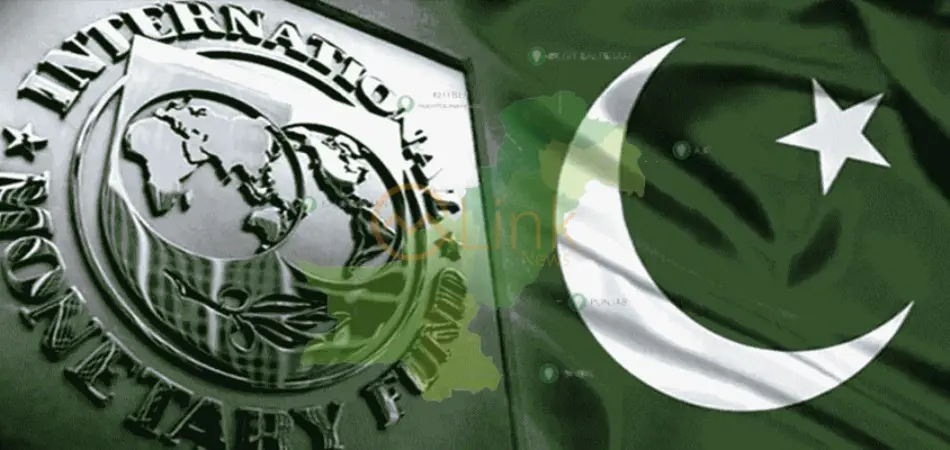
IMF support bolsters Pakistan amid Middle East war risks
MG News | May 15, 2026 at 09:43 AM GMT+05:00

May 15, 2026 (MLN): Pakistan has spent the better part of two years doing everything right tightening its fiscal stance, rebuilding its reserves, and staying the course on painful reforms. The results have been visible.
GDP growth accelerated in the first half of fiscal year
2026, inflation stayed contained, the current account was broadly balanced, and
foreign reserves were rebuilt at a pace that exceeded the IMF's own
projections.
For a country that was not long ago teetering on the edge of
a balance-of-payments crisis, these were numbers worth celebrating.
Then the Middle East went to war. And suddenly, the
fragility underneath Pakistan's recovery became harder to ignore.
The IMF has been direct about the threat. The conflict is
expected to put upward pressure on inflation, weigh on growth, and strain the
balance of payments.
The Fund's baseline scenario holds that the overall impact
will remain contained but it adds, with unusual candour, that downside risks
are high and that there is great uncertainty about how developments will
unfold.
For an economy still carrying elevated poverty rates and
subdued growth, that uncertainty is not a distant concern. It is an immediate
one.
What makes the situation harder is that Pakistan did not
create this shock and cannot control it.
The war's pressure arrives through channels the country is
already stretched on energy costs, import prices, and the broader regional
environment on which Pakistani trade and remittance flows depend.
The government has committed to keeping fuel and energy
tariffs in line with actual cost recovery, a policy designed to prevent
unaffordable subsidies from reopening the fiscal wounds that took years to
close.
But that commitment becomes politically and economically
more difficult to hold when global energy prices are being driven upward by
conflict rather than by market cycles.
Targeted support for vulnerable consumers remains part of
the framework, but with poverty still elevated, the margin between a manageable
adjustment and a social pressure point is thin.
On the monetary side, the State Bank of Pakistan is
maintaining an appropriately tight policy stance specifically to keep inflation
expectations anchored at a moment when commodity prices are volatile.
The logic is sound: once inflation psychology embeds itself,
dislodging it requires far more pain than preventing it. But tight monetary
policy also means that growth, already subdued, receives no domestic stimulus
to offset what the external environment is taking away.
The exchange rate is the third line of defence. Authorities
have committed to maintaining a flexible rupee as the primary shock absorber
allowing the currency to adjust rather than burning through reserves defending
an artificial level.
This is the correct policy response to an external
terms-of-trade shock, and the IMF has been consistent in requiring it.
But currency flexibility, while economically rational, is
immediately felt by households and businesses through higher import costs, and
it adds to the inflationary pressures already building from the Middle East
conflict.
Against all of this, Pakistan's IMF programme itself is
holding firm. The 37-month Extended Fund Facility, approved in September 2024,
passed its third review with all seven Quantitative Performance Criteria met at
end-December and six of eight Indicative Targets cleared.
Most structural benchmarks were also delivered. Completion
of the review unlocks SDR 760m approximately $1.1bn bringing total EFF
disbursements to SDR 3,040m.
The 29-month Resilience and Sustainability Facility,
approved in May 2025, is similarly on track, with both reform measures due
under the second review met, releasing a further SDR 153.8m, or roughly $220m.
That financing matters not just as a number but as a signal
to markets, to other creditors, and to the Pakistani public — that the reform
effort is credible and being honoured.
The authorities have reaffirmed their commitment to the full
range of programme policies: the gradual fiscal consolidation plan, the drive
to broaden the tax base and generate resources for social and development
spending, improvements to public financial management, and the deeper
structural reforms that take longer to deliver but matter most for sustained
growth.
These include strengthening anti-corruption institutions,
advancing the privatisation of state-owned enterprises, and eliminating the
regulatory distortions that have long suppressed private sector dynamism.
Running alongside the EFF is the RSF arrangement, which
addresses a dimension of vulnerability that traditional IMF programmes rarely
touch directly.
Pakistan is among the world's most climate-exposed
economies, and the RSF policies are designed to reduce that exposure improving
the country's climate information architecture, reducing economic vulnerability
to climate shocks, and creating the conditions for climate-focused investment
to flow more readily into the economy.
With both review measures met, this strand of the programme
is keeping pace with the broader fiscal effort.
The picture that emerges from all of this is of a country
that has genuinely done the hard work and now finds itself facing an external
storm it did not invite.
Pakistan's reserves are stronger than they were. Its fiscal
position is more disciplined. Its reform commitments are intact.
The IMF has said clearly that strong policy and steadfast
reform efforts remain paramount to safeguarding stability and supporting higher
growth and that framing, amidst a very uncertain international environment,
carries an implicit acknowledgement that what has been built is real, but not
yet invulnerable.
Whether Pakistan's rebuilt resilience is deep enough to
absorb what the Middle East war may yet deliver is a question no review
document can answer.
What the documents do confirm is that the country enters
this period of uncertainty in considerably better shape than it has faced
previous crises and that, for now, is
the most honest thing that can be said.
Copyright Mettis Link News
Related News
.png?width=280&height=140&format=Webp)

| Name | Price/Vol | %Chg/NChg |
|---|---|---|
| KSE100 | 167,089.28 109.91M | -0.21% -352.63 |
| ALLSHR | 101,117.40 308.32M | -0.15% -155.10 |
| KSE30 | 49,841.71 50.59M | -0.28% -142.15 |
| KMI30 | 240,372.43 78.75M | -0.02% -45.72 |
| KMIALLSHR | 65,518.16 188.07M | -0.05% -35.70 |
| BKTi | 46,228.77 7.60M | -0.60% -281.04 |
| OGTi | 33,974.66 4.20M | -0.27% -91.31 |
| Symbol | Bid/Ask | High/Low |
|---|
| Name | Last | High/Low | Chg/%Chg |
|---|---|---|---|
| BITCOIN FUTURES | 83,505.00 | 84,320.00 82,645.00 | 1035.00 1.26% |
| BRENT CRUDE | 104.54 | 0.00 0.00 | -0.18 -0.17% |
| RICHARDS BAY COAL MONTHLY | 128.50 | 0.00 0.00 | 0.75 0.59% |
| ROTTERDAM COAL MONTHLY | 143.40 | 143.40 143.40 | -1.15 -0.80% |
| USD RBD PALM OLEIN | 1,167.50 | 1,167.50 1,167.50 | 0.00 0.00% |
| CRUDE OIL - WTI | 91.66 | 0.00 0.00 | -0.19 -0.21% |
| SUGAR #11 WORLD | 20.27 | 20.44 20.09 | 0.12 0.60% |
Chart of the Day
Latest News
Top 5 things to watch in this week
 PIB Auction
Pakistan Stock Movers
| Name | Last | Chg/%Chg |
|---|
| Name | Last | Chg/%Chg |
|---|