
Hormuz disruption likely temporary oil price upside limited
MG News | March 05, 2026 at 09:50 AM GMT+05:00

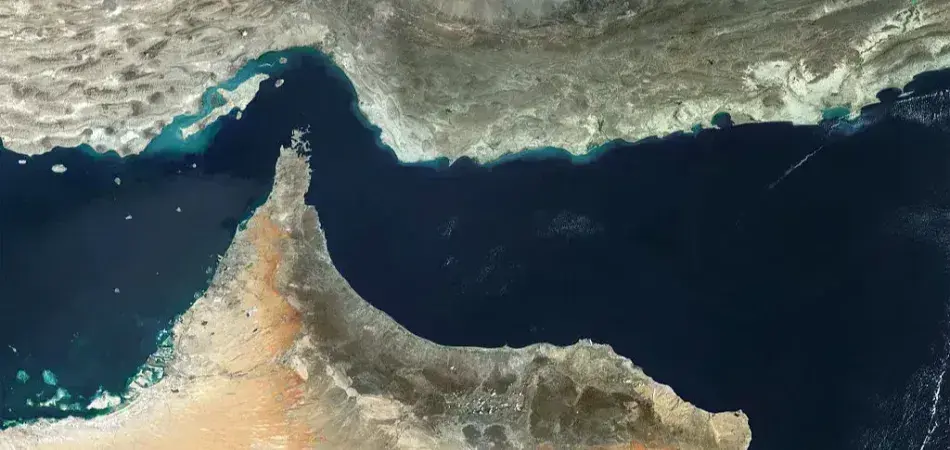
March 05, 2026 (MLN): The current disruption to shipping through the Strait of Hormuz, which has pushed oil prices higher following the Iran conflict outbreak 28 February 2026, is expected to be short-lived due to the waterway’s critical role in global energy trade, according to Fitch Ratings.
The ratings agency said that the effective disruption of the
strait caused by rising security risks for tankers rather than a formal closure
should not lead to a sustained surge in oil prices.
It therefore does not anticipate major upside to its
December 2025 forecast, which projects an average Brent crude oil price
of $63 per barrel in 2026.
Shipping activity through the strait has slowed
significantly as vessels avoid the route due to fears of attacks by Iran
or its allied groups.
Several major oil companies have paused shipments for safety
reasons, while insurers have withdrawn war-risk coverage for tankers operating
in the region.
Despite the disruption, Fitch believes the situation is
unlikely to persist. The strait remains one of the most important corridors for
energy transportation globally, and alternative export routes are limited.
Before tensions escalated, roughly 20m barrels per day
of crude oil and petroleum products passed through the waterway.
This represents about 25% of global seaborne oil trade
and nearly 20% of worldwide oil consumption.
A large portion of these flows originates from Gulf
producers including Saudi Arabia, the United Arab Emirates, Iraq,
Kuwait, and Iran.
Around half of the oil transported through the strait is
exported by Saudi Arabia and the UAE, while the remainder comes from Iraq,
Kuwait and Iran. Major buyers include China and India, which
together account for roughly half of these shipments.
Because the waterway is vital for both exporters and
importers, a prolonged disruption is not considered the base scenario.
Fitch noted that if navigation were to remain severely
restricted for an extended period, naval escorts for tankers could be deployed,
similar to measures taken during the Iran Iraq War.
The agency also pointed out that global oil market
oversupply should help limit price spikes linked to geopolitical tensions.
Oil supply growth exceeded demand expansion in 2025, and
this imbalance is expected to continue.
Global production rose by about 3m barrels per day in
2025, while demand increased by less than 1m barrels per day. For
2026, Fitch forecasts supply growth of 2.4m barrels per day, compared
with demand growth of roughly 0.8m barrels per day.
Approximately half of the expected supply increase during
2025 2026 is projected to come from non-OPEC+ producers unaffected by the
conflict.
Meanwhile, the OPEC+ group holds spare production
capacity estimated at 4.3m barrels per day, which could help stabilize
the market if needed.
Global oil inventories have also expanded. Observed
stockpiles increased by 1.3m barrels per day in 2025, reaching their
highest levels since March 2021.
By the end of 2025, worldwide inventories totaled 8.2bn
barrels, an amount Fitch estimates could offset a complete halt of
shipments through the strait for more than 400 days.
Some regional producers also possess infrastructure that can
partially bypass the strait. Saudi Aramco operates the East–West
crude oil pipeline, which can transport about 5m barrels per day to
export terminals on the Red Sea.
Meanwhile, the UAE runs a pipeline with 1.5m barrels per
day capacity linking its oil fields to the Fujairah terminal on the Gulf
of Oman, with peak flows reaching 1.8m barrels per day.
Although Iran remains an important oil producer, pumping
around 3.5m barrels per day and exporting roughly 2m barrels per day,
it accounts for only about 3.5% of global crude output.
As a result, any disruption to Iranian supply could
potentially be balanced by excess production capacity elsewhere.
Nevertheless, Fitch cautioned that the evolving regional
conflict remains uncertain.
A prolonged obstruction of the Strait of Hormuz or sustained
damage to oil and gas infrastructure across the region could significantly
tighten supply and push oil prices above current forecasts.
Oil market volatility would also increase if Iranian
production were materially affected.
Copyright Mettis Link News
Related News
_20260421112347985_f8783f.jpeg?width=280&height=140&format=Webp)

| Name | Price/Vol | %Chg/NChg |
|---|---|---|
| KSE100 | 167,089.28 109.91M | -0.21% -352.63 |
| ALLSHR | 101,117.40 308.32M | -0.15% -155.10 |
| KSE30 | 49,841.71 50.59M | -0.28% -142.15 |
| KMI30 | 240,372.43 78.75M | -0.02% -45.72 |
| KMIALLSHR | 65,518.16 188.07M | -0.05% -35.70 |
| BKTi | 46,228.77 7.60M | -0.60% -281.04 |
| OGTi | 33,974.66 4.20M | -0.27% -91.31 |
| Symbol | Bid/Ask | High/Low |
|---|
| Name | Last | High/Low | Chg/%Chg |
|---|---|---|---|
| BITCOIN FUTURES | 83,280.00 | 83,320.00 82,645.00 | 810.00 0.98% |
| BRENT CRUDE | 104.54 | 105.09 102.33 | 0.26 0.25% |
| RICHARDS BAY COAL MONTHLY | 128.50 | 0.00 0.00 | 0.75 0.59% |
| ROTTERDAM COAL MONTHLY | 143.40 | 143.40 143.40 | -1.15 -0.80% |
| USD RBD PALM OLEIN | 1,167.50 | 1,167.50 1,167.50 | 0.00 0.00% |
| CRUDE OIL - WTI | 91.66 | 0.00 0.00 | -0.19 -0.21% |
| SUGAR #11 WORLD | 20.27 | 20.44 20.09 | 0.12 0.60% |
Chart of the Day
Latest News
Top 5 things to watch in this week
 PIB Auction
Pakistan Stock Movers
| Name | Last | Chg/%Chg |
|---|
| Name | Last | Chg/%Chg |
|---|