
Gas Rationing Is Not an Energy Policy
Shahid Anwar | November 17, 2026 at 09:37 AM GMT+05:00

November 17, 2026 (MLN): Pakistan's gas crisis is
no longer a seasonal problem. It is becoming a serious challenge for
households, industry, agriculture and the wider economy.
Restricting domestic gas
supply to three meal-time windows may help manage an immediate shortage, but it
is not a sustainable energy policy.
The real question is why a
country with a long history of natural gas production has reached a stage where
households struggle to cook meals and businesses cannot plan their operations
with confidence.
According to SSGC Managing
Director Muhammad Amin Rajput, Pakistan's domestic gas production has fallen by
approximately 50% over the past decade.
SSGC's available supply
has declined to around 605 million cubic feet per day (mmcfd), compared with
695 mmcfd a year earlier. Of this, approximately 300 mmcfd is being supplied to
domestic consumers, with the remainder going to industry, power and fertilizer
sectors.
The Pakistan Institute of
Development Economics (PIDE), in its 2026 research paper Powering Economic
Security, also reported a significant decline in domestic gas production,
from 3,597 mmcfd in FY2020 to 2,890 mmcfd in FY2025.
Although these figures
cover different periods, they point to the same underlying concern: Pakistan's
indigenous gas supply is steadily declining.
Households Are Paying the
Price
The immediate consequences
are being felt in millions of homes, particularly in urban areas. Restricting
gas availability to breakfast, lunch and dinner hours has disrupted ordinary
household routines.
Women, who often carry the
primary responsibility for meal preparation, face additional pressure to
complete cooking within limited supply windows.
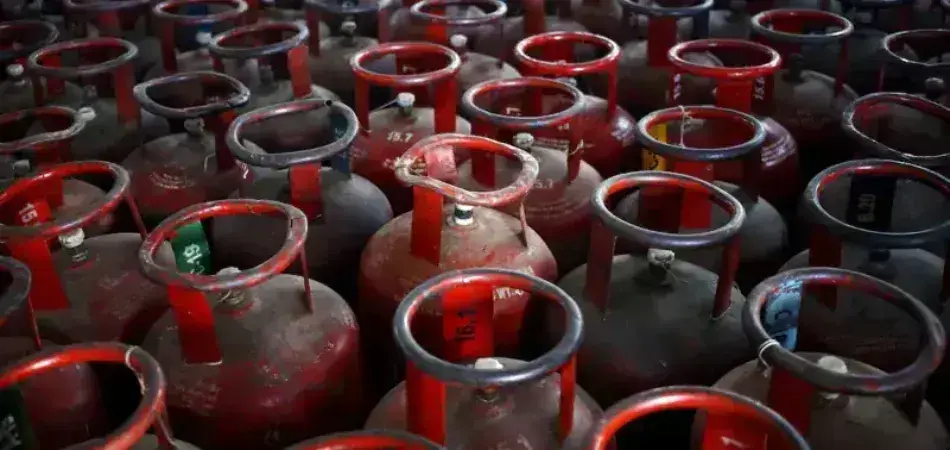
When gas pressure is
inadequate or supply is unavailable, families have to turn to alternatives such
as LPG cylinders and electric appliances.
This means additional
expenditure at a time when household budgets are already under pressure. Women
also bear the extra time and effort involved in managing these arrangements.
This is not simply an inconvenience.
It is an issue of
household welfare, affordability and women's unpaid work. Energy insecurity has
a direct social and gender dimension that must be recognized in public policy.
Until supply improves, gas
distribution companies should announce clear and reliable schedules in advance
and make every effort to follow them.
Families should at least
know when gas will be available so they can plan their daily routines. Where
piped gas cannot be supplied reliably, targeted support for affordable and safe
cooking alternatives should be considered, particularly for low-income
households.
Why Is Domestic Production
Declining?
The decline in domestic
production cannot be explained by geological depletion alone.
Mature gas fields are
naturally losing output, but inadequate exploration, delayed investment,
unattractive fiscal terms and financial difficulties in the gas supply chain
have also affected the sector.
Pakistan's gas industry
has suffered from distorted pricing, delayed payments to exploration and
production companies, and accumulated financial liabilities.
According to figures
presented by the Petroleum Division in the National Assembly, gas-sector
circular debt stood at Rs. 3.631 trillion as of June 30, 2026.
Outstanding payments to
domestic gas and LNG suppliers amounted to a further Rs. 1.823 trillion, taking
the combined burden to Rs. 5.454 trillion.
These liabilities weaken
confidence among investors and suppliers. Exploration requires substantial
capital, technical expertise and long-term commitment.
Companies are less likely
to invest when payments are delayed and the commercial environment remains
uncertain.
Pricing is another part of
the problem. For years, gas prices have remained below the actual cost of
supply for various categories of consumers.
While this has provided
short-term relief, it has also weakened the financial position of the sector.
Low prices can discourage investment in new exploration and encourage
unnecessary consumption.
However, pricing is only
one part of a wider problem that also includes delayed payments, regulatory
uncertainty and the natural decline of mature fields.
The government needs to
move towards more realistic pricing while protecting low-income households
through targeted support.
The cost of subsidies
should also be made public so that their financial impact is properly
understood.
The objective should be to
encourage investment, reduce waste and maintain affordability for those who
need protection.
Imported LNG Is Not a
Permanent Solution
Pakistan has increasingly
relied on imported liquefied natural gas (LNG) to bridge the gap between
domestic production and consumption.
However, international
price fluctuations, shipping disruptions and geopolitical tensions have exposed
the risks of excessive dependence on imported supplies.
Recent disruptions to
Qatar's LNG operations and shipping through the Strait of Hormuz have affected
Pakistan's supplies.
In November 2026, Pakistan
sought additional LNG cargoes to meet winter demand, highlighting the
vulnerability of relying on international markets during periods of
geopolitical uncertainty.
Imported LNG has an
important role in meeting energy requirements, but it cannot replace a serious
domestic production strategy. Pakistan must review its long-term import
commitments in line with realistic demand forecasts, domestic production and
changing consumption patterns.
An energy policy that
depends heavily on imported fuel while indigenous production continues to
decline leaves the country exposed to international market risks and
foreign-exchange pressures.
Gas Must Be Used More
Productively
Declining supply also
makes the question of gas allocation increasingly important. When a resource
becomes scarce, its use must be guided by transparent economic and social
priorities.
Household cooking
requirements deserve protection, particularly for low-income families. At the
same time, interruptions to fertilizer production can affect agricultural
productivity, while unreliable industrial supplies increase manufacturing
costs, disrupt employment and weaken export competitiveness.
The government needs a
transparent allocation framework that considers essential household
consumption, industrial output, fertilizer availability, electricity
requirements and the cost of alternative energy sources.
This does not mean placing
industry above households. It means using the available resource more
intelligently and reducing avoidable economic losses.
An annual gas allocation
plan should be published, showing projected availability and the proposed
distribution among different sectors. The reasons behind major allocation
decisions should also be made public.
This would improve
transparency and reduce the possibility of decisions being driven by short-term
administrative or political pressures.
What Should the Government
Do?
Pakistan needs to move
from managing gas shortages to restoring supply and improving efficiency. This
requires a coordinated programme with clear responsibilities and measurable
results.
First, revive domestic
exploration and production. Review exploration
licensing, fiscal incentives, approval procedures and commercial terms to
attract fresh investment.
Existing discoveries and
commercially viable fields should be developed without unnecessary delays.
Pending exploration and development applications should be decided within fixed
time limits, supported by a single-window system to reduce bureaucratic hurdles.
Second, address
outstanding payments. Introduce a time-bound
plan to settle verified receivables of domestic gas producers. Financial
discipline across the gas supply chain is essential to restore investor
confidence and encourage fresh investment.
Third, rationalize gas
pricing. Move towards prices that better
reflect the cost of supply while protecting low-income households through
targeted subsidies or direct support.
Generalized subsidies that
encourage inefficient consumption and weaken the financial position of the
sector should be reviewed.
Fourth, reduce
transmission and distribution losses. Gas
theft, leakage, ageing pipelines and inefficient distribution systems waste a
valuable resource.
SSGC and SNGPL should have
measurable annual targets for reducing unaccounted-for gas, supported by
independent performance reviews.
Fifth, prepare a ten-year
gas supply and demand roadmap. This
should include realistic domestic production targets, exploration plans, LNG
procurement requirements, infrastructure investment and alternative energy
development.
The roadmap should be
reviewed annually in light of actual supply and demand conditions.
Finally, strengthen
coordination and accountability. The
relevant ministries, regulators and gas companies should have clearly defined
responsibilities for implementing these reforms.
A high-level coordination
mechanism should review progress every quarter and publish updates on domestic
production, investment, outstanding payments, distribution losses and household
supply.
The cost of subsidies and
progress on the annual allocation plan should also be reported publicly.
The Choice Is Between
Reform and Permanent Rationing
Pakistan cannot continue
treating gas shortages as a routine administrative challenge.
Three-window supply
schedules may distribute the available gas, but they do not increase
production, encourage investment or reduce the economic cost of energy
insecurity.
The country needs to
address the policies and financial weaknesses that have discouraged investment,
improve the efficiency of its distribution system and ensure that available gas
is used responsibly.
At the same time,
households must be protected from the immediate consequences of unreliable
supply.
The cost of inaction is
already visible in household hardship, women's additional burden, industrial
disruptions, agricultural uncertainty and growing dependence on imported
energy.
Gas rationing may manage
today's shortage, but only structural reform can protect tomorrow's energy
security.
Pakistan must move from
managing scarcity to restoring supply, improving efficiency and safeguarding
its people and productive economy.
About Author:
The writer, Shahid Anwar, is
an Economic Analyst, researcher, op-ed writer, and Business & Trade
Advisor.
He previously served as
Secretary General of the Federation of Pakistan Chambers of Commerce &
Industry (FPCCI) and Senior Director, Research & Publications, at the
Institute of Cost and Management Accountants of Pakistan (ICMA).
He brings 36 years of
experience in economic, business and trade affairs. He is currently the Founder
& Chief Executive of SAKA Business Services
Disclaimer:
The above analysis/article
is for informational and educational purposes only.
Copyright Mettis Link News
Related News


| Name | Price/Vol | %Chg/NChg |
|---|---|---|
| KSE100 | 179,011.88 11.37M | 0.47% 828.93 |
| ALLSHR | 107,230.70 82.78M | 0.37% 392.28 |
| KSE30 | 52,226.32 7.13M | 0.51% 263.10 |
| KMI30 | 257,160.70 7.70M | 0.58% 1483.36 |
| KMIALLSHR | 69,600.96 29.49M | 0.43% 301.13 |
| BKTi | 48,897.77 0.88M | 0.41% 201.27 |
| OGTi | 36,461.12 0.69M | 0.15% 55.26 |
| Symbol | Bid/Ask | High/Low |
|---|
| Name | Last | High/Low | Chg/%Chg |
|---|---|---|---|
| BITCOIN FUTURES | 64,945.00 | 65,470.00 64,380.00 | -160.00 -0.25% |
| BRENT CRUDE | 91.60 | 92.24 91.26 | -0.84 -0.91% |
| RICHARDS BAY COAL MONTHLY | 127.15 | 0.00 0.00 | -0.15 -0.12% |
| ROTTERDAM COAL MONTHLY | 138.00 | 0.00 0.00 | 1.60 1.17% |
| USD RBD PALM OLEIN | 1,182.50 | 1,182.50 1,182.50 | 0.00 0.00% |
| CRUDE OIL - WTI | 85.01 | 85.59 84.73 | -0.71 -0.83% |
| SUGAR #11 WORLD | 18.10 | 18.43 18.07 | -0.31 -1.68% |
Chart of the Day
Latest News
Top 5 things to watch in this week
Pakistan Stock Movers
| Name | Last | Chg/%Chg |
|---|
| Name | Last | Chg/%Chg |
|---|