
Policy continuity key to Pakistan’s long-term development
MG News | July 29, 2026 at 04:56 PM GMT+05:00

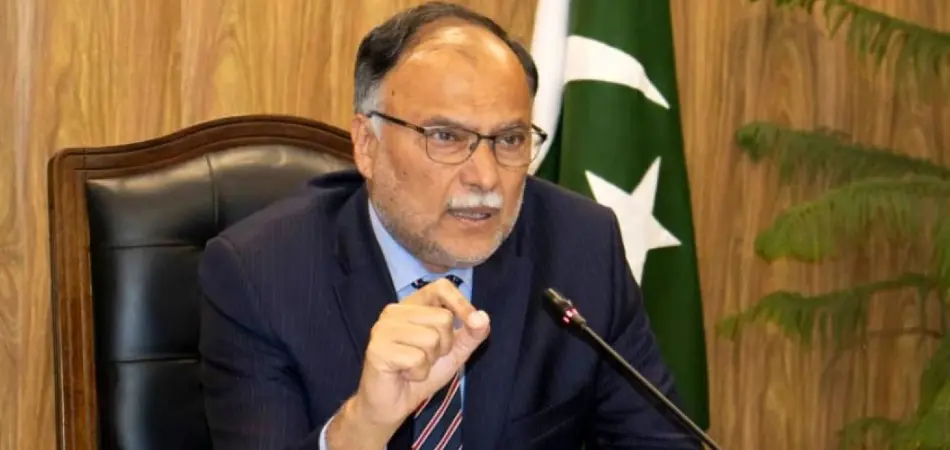
July 29, 2026 (MLN): Policy continuity for at least 10 to 15 years is essential for Pakistan to achieve sustainable national development, while frequent policy reversals following changes in government have repeatedly disrupted the country’s progress, Federal Minister for Planning, Development and Special Initiatives Professor Ahsan Iqbal said on Wednesday.
Addressing the Strategic Dialogue and launch ceremony of
Development Advocate Pakistan, the minister said long-term national development
plans could only succeed when successive governments maintained consistency in
policies instead of replacing the entire policy framework after every political
transition.
He said Pakistan’s previous development roadmaps, including
Vision 2020 and Vision 2025, could not achieve their intended objectives due to
policy discontinuity. Even the best-designed development programmes, he added,
could not deliver results without sustained implementation.
Ahsan Iqbal identified Pakistan’s fragmented socio-economic
structure as its biggest challenge, stressing that economic growth needed to be
accompanied by improvements in education, health, population management and
social development to ensure lasting prosperity.
Under the Uraan Pakistan initiative, the government had
adopted a comprehensive strategy to address structural challenges, with
investment in education, healthcare, youth and women remaining essential for
national development.
The minister highlighted the country’s demographic
pressures, saying Pakistan’s population had reached around 260 million and
could rise to between 370 million and 380 million by 2050 without effective
population management measures.
He said climate change had increased threats to water and
food security and called for close coordination with provincial governments to
implement effective population control and social development programmes.
Expressing concern over public health indicators, Ahsan
Iqbal said Pakistan had the highest number of Hepatitis C patients in the
world, with more than 10 million people affected by the disease.
He said the federal government had decided to make Islamabad
and adjoining areas a Hepatitis-free region, while similar efforts were being
extended to Gilgit-Baltistan and Azad Jammu and Kashmir.
He urged provincial governments to support the nationwide
campaign to eliminate the disease.
The minister also highlighted the growing burden of diabetes
and urged citizens to adopt healthier lifestyles to reduce the prevalence of
non-communicable diseases.
On polio eradication, he said Pakistan and Afghanistan were
the only countries that had yet to completely eradicate the disease. He
described attacks on polio workers as against the national interest and a
matter of shame.
He stressed that disease prevention required behavioural
change and sustained public awareness campaigns alongside government
interventions.
Ahsan Iqbal said scientific research showed that nearly 90%
of a child’s mental development was completed by the age of five, making early
childhood care and development critical for building a productive society.
He added that several social problems, including crime and
drug addiction, were often linked to adverse childhood experiences, underlining
the need for greater investment in children’s early years.
The minister urged the media to give greater prominence to
national issues including education, health and population instead of focusing
predominantly on political disputes.
Under Uraan Pakistan, he announced that one million young
people would be trained as ambassadors of social change to promote awareness
about education, healthcare and population issues within their communities.
Describing youth as Pakistan’s greatest national asset,
Ahsan Iqbal also called on citizens to contribute to maintaining cleanliness
and protecting the environment.
Citing the impact of poor civic behaviour, he said around
4,500 tonnes of plastic waste had been removed from drains in Lahore following
recent rains. He noted that indiscriminate disposal of plastic and garbage
often contributed to urban flooding.
He said infrastructure development alone could not address
such challenges without positive changes in public attitudes and civic
responsibility.
The minister said Pakistan’s literacy rate remained around
60%, while nearly 40% of children suffered from stunting due to malnutrition,
highlighting the need to address these fundamental social challenges.
He stressed that investment in artificial intelligence,
modern technologies and infrastructure was imperative to improve Pakistan’s
competitiveness and accelerate economic transformation.
Ahsan Iqbal said Pakistan’s future depended on sustained
structural reforms, long-term planning and collective national commitment to
overcome deep-rooted socio-economic challenges and achieve sustainable
development.
Copyright Mettis Link News
Related News
.png?width=280&height=140&format=Webp)

| Name | Price/Vol | %Chg/NChg |
|---|---|---|
| KSE100 | 167,089.28 109.91M | -0.21% -352.63 |
| ALLSHR | 101,117.40 308.32M | -0.15% -155.10 |
| KSE30 | 49,841.71 50.59M | -0.28% -142.15 |
| KMI30 | 240,372.43 78.75M | -0.02% -45.72 |
| KMIALLSHR | 65,518.16 188.07M | -0.05% -35.70 |
| BKTi | 46,228.77 7.60M | -0.60% -281.04 |
| OGTi | 33,974.66 4.20M | -0.27% -91.31 |
| Symbol | Bid/Ask | High/Low |
|---|
| Name | Last | High/Low | Chg/%Chg |
|---|---|---|---|
| BITCOIN FUTURES | 83,875.00 | 84,320.00 82,645.00 | 1405.00 1.70% |
| BRENT CRUDE | 104.54 | 105.09 102.33 | 0.26 0.25% |
| RICHARDS BAY COAL MONTHLY | 128.50 | 0.00 0.00 | 0.75 0.59% |
| ROTTERDAM COAL MONTHLY | 143.40 | 143.40 143.40 | -1.15 -0.80% |
| USD RBD PALM OLEIN | 1,167.50 | 1,167.50 1,167.50 | 0.00 0.00% |
| CRUDE OIL - WTI | 91.66 | 0.00 0.00 | -0.19 -0.21% |
| SUGAR #11 WORLD | 20.27 | 20.44 20.09 | 0.12 0.60% |
Chart of the Day
Latest News
Top 5 things to watch in this week
 PIB Auction
Pakistan Stock Movers
| Name | Last | Chg/%Chg |
|---|
| Name | Last | Chg/%Chg |
|---|