
Fiscal space created for broad-based relief in budget 2026–27

MG News | June 17, 2026 at 06:30 PM GMT+05:00

June 17, 2026 (MLN): The government has created fiscal space through economic stability, tax reforms and effective enforcement, enabling it to provide substantial relief to salaried individuals, exporters, industry, housing, agriculture, information technology and youth in the Federal Budget 2026–27, Federal Minister for Information and Broadcasting Attaullah Tarar said on Wednesday.
He said the economy had been steered away from serious
challenges, including the threat of default, high inflation, exchange rate
instability and historically low foreign exchange reserves, and had now been
placed on a path of stability under the leadership of Prime Minister Shehbaz
Sharif.
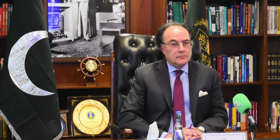
The minister made these remarks during an online briefing,
which was also attended by Minister of State for Finance Bilal Azhar Kayani.
He said FBR reforms, digitalisation, improvements in the tax
system, enhanced recoveries from major sectors, incentives for housing and
exports, youth loan and skills programmes, abolition of duties on agricultural
machinery, and facilitation measures for the IT sector and freelancers had
supported broad-based economic activity and public relief.
Tarar said some people were accustomed to criticism for the
sake of criticism, adding that even opponents of the budget were appreciating
it and describing it as a relief-oriented budget.
He said that in the past, Pakistan Tehreek-e-Insaf (PTI)
leaders repeatedly warned of default, while foreign exchange reserves had
fallen to very low levels, import requirements were difficult to meet, and the
exchange rate was highly volatile.
He added that inflation had reached 38 percent, with
projections of up to 50 percent, the policy rate had crossed 22 percent, and
remittances had declined significantly.
He said that in such circumstances, some officials had even
taken leave as no one was willing to take responsibility for stabilising the
economy.
He added that the current leadership of the Pakistan Muslim
League-Nawaz (PML-N) took charge of economic management under the vision of
Muhammad Nawaz Sharif and Prime Minister Shehbaz Sharif.
He said that if matters with the International Monetary Fund
(IMF) had not been settled in Paris, the country could have faced default. He
added that the prime minister personally worked to secure successful IMF
negotiations, leading to Pakistan entering the programme and achieving
stability.
Tarar said the government had repeatedly stated that relief
would be provided once fiscal space was created, adding that instead of
waiting, efforts were made to generate that space through reforms.
He said the Federal Board of Revenue (FBR) was restructured
through digitalisation, removal of recommendation-based practices, and
introduction of a merit-based system across customs and income tax operations.
A faceless appraisal system was implemented at ports,
removing direct interaction between importers, exporters and customs officials,
and enabling faster processing through online systems.
He said major sectors such as sugar, beverages, cement and
tobacco had been earning high profits while not contributing taxes
proportionate to earnings.
He added that monitoring systems, including cameras,
IT-based tracking, production monitoring and barcode and QR coding of sugar
bags, had been introduced, resulting in an additional Rs 60 billion tax
collection from the sugar sector alone.
He said Rs 200 billion in revenue leakage had been
identified in the tobacco sector, while enforcement actions were taken against
illegal trade in the beverages and cement sectors.
He added that nearly Rs 800 billion in additional revenue
had been generated through enforcement measures within a year.
He said tribunals were established to resolve tax disputes,
leading to recoveries worth hundreds of billions of rupees through removal of
stay orders and clearance of pending cases.
He said these reforms created the fiscal space that enabled
relief for the public, adding that tax evaders should not be allowed to shift
burden onto compliant taxpayers.
Tarar said individuals earning up to Rs 50,000 per month
would pay no tax, while those earning between Rs 50,000 and Rs 100,000 would
pay one percent tax, with reductions introduced for other income groups as
well.
He said relief measures were also introduced for the housing
sector, including reduced taxes on the purchase and sale of five-marla and
ten-marla houses and plots, along with Rs 90 billion allocated for the Apna
Ghar Programme.
He said exporters had been provided relief through the
abolition of advance tax and super tax, while the interest rate under the
Export Refinance Scheme had been fixed at four percent to enhance
competitiveness.
He said significant funds had been allocated under the Prime
Minister’s Youth Programme, under which 550,000 young people would benefit from
agricultural and business loans. He added that technical training, sports
talent initiatives, Daanish Schools and Daanish University were also being
expanded.
He said import duty on agricultural machinery had been
abolished, while additional facilitation measures were introduced for the
private sector. He added that no new taxes had been imposed on the IT sector or
freelancers, and incentives for IT companies were maintained.
He said approximately 3.6 million retailers outside the tax
net would be brought into the system through a fixed tax scheme, under which a
minimum annual tax of Rs 25,000 would be applied along with issuance of FBR
certificates.
He said consultations were ongoing with jewellers’
associations regarding their demands, and an appropriate policy would be
formulated.
He said all duties on agricultural machinery imports had
been removed, while youth and agricultural loan programmes and innovation
schemes would continue with reduced financing costs.
He added that salaried individuals, exporters and industry
had all benefited from the budget, and that various stakeholders, including
former finance minister Miftah Ismail, had also acknowledged relief measures.
Tarar said the country was moving towards stability due to
collective efforts, acknowledging contributions from the finance minister,
relevant institutions, the Special Investment Facilitation Council and other
stakeholders, under the leadership vision of Muhammad Nawaz Sharif.
Copyright Mettis Link News
Related News
.png?width=280&height=140&format=Webp)

| Name | Price/Vol | %Chg/NChg |
|---|---|---|
| KSE100 | 167,089.28 109.91M | -0.21% -352.63 |
| ALLSHR | 101,117.40 308.32M | -0.15% -155.10 |
| KSE30 | 49,841.71 50.59M | -0.28% -142.15 |
| KMI30 | 240,372.43 78.75M | -0.02% -45.72 |
| KMIALLSHR | 65,518.16 188.07M | -0.05% -35.70 |
| BKTi | 46,228.77 7.60M | -0.60% -281.04 |
| OGTi | 33,974.66 4.20M | -0.27% -91.31 |
| Symbol | Bid/Ask | High/Low |
|---|
| Name | Last | High/Low | Chg/%Chg |
|---|---|---|---|
| BITCOIN FUTURES | 83,875.00 | 84,320.00 82,645.00 | 1405.00 1.70% |
| BRENT CRUDE | 104.54 | 105.09 102.33 | 0.26 0.25% |
| RICHARDS BAY COAL MONTHLY | 128.50 | 0.00 0.00 | 0.75 0.59% |
| ROTTERDAM COAL MONTHLY | 143.40 | 143.40 143.40 | -1.15 -0.80% |
| USD RBD PALM OLEIN | 1,167.50 | 1,167.50 1,167.50 | 0.00 0.00% |
| CRUDE OIL - WTI | 91.66 | 0.00 0.00 | -0.19 -0.21% |
| SUGAR #11 WORLD | 20.27 | 20.44 20.09 | 0.12 0.60% |
Chart of the Day
Latest News
Top 5 things to watch in this week
 PIB Auction
Pakistan Stock Movers
| Name | Last | Chg/%Chg |
|---|
| Name | Last | Chg/%Chg |
|---|