
China pulls far ahead of India in turning PhDs into domestic science
MG News | September 10, 2026 at 09:23 AM GMT+05:00

September 10, 2026 (MLN): China and India, Asia's
two largest producers of US-trained STEM PhDs, have diverged sharply in
translating that talent into domestic scientific output, with China now
producing several times more world-class research despite both nations training
researchers of comparable quality abroad.
The comparison was drawn by Atif Mian in a LinkedIn
post, who argued that incorporating science into a society is a first-order
determinant of development, and that China succeeded in indigenizing science in
ways India did not.
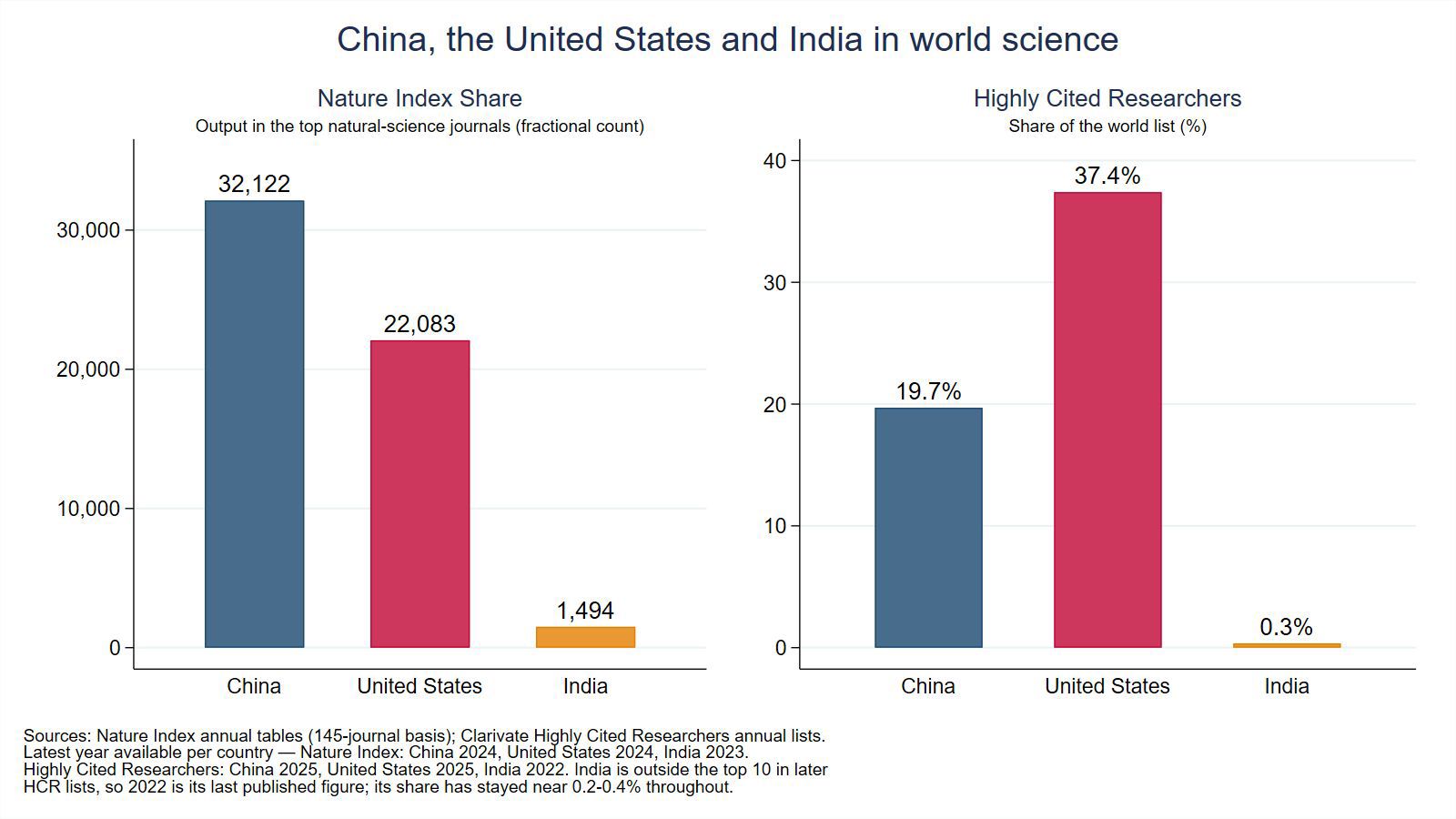
According to Nature Index annual tables, China's
fractional output in the top 145 natural-science journals stood at 32,122 in
2024, ahead of the United States' 22,083, while India's count for 2023 came in
at just 1,494.
On Clarivate's Highly Cited Researchers list, the United States held a 37.4% share of the world total in 2025 and China 19.7%, whereas India's share, last published in 2022, was 0.3%, a level it has hovered near since data became available.
The divergence traces back to R&D investment.
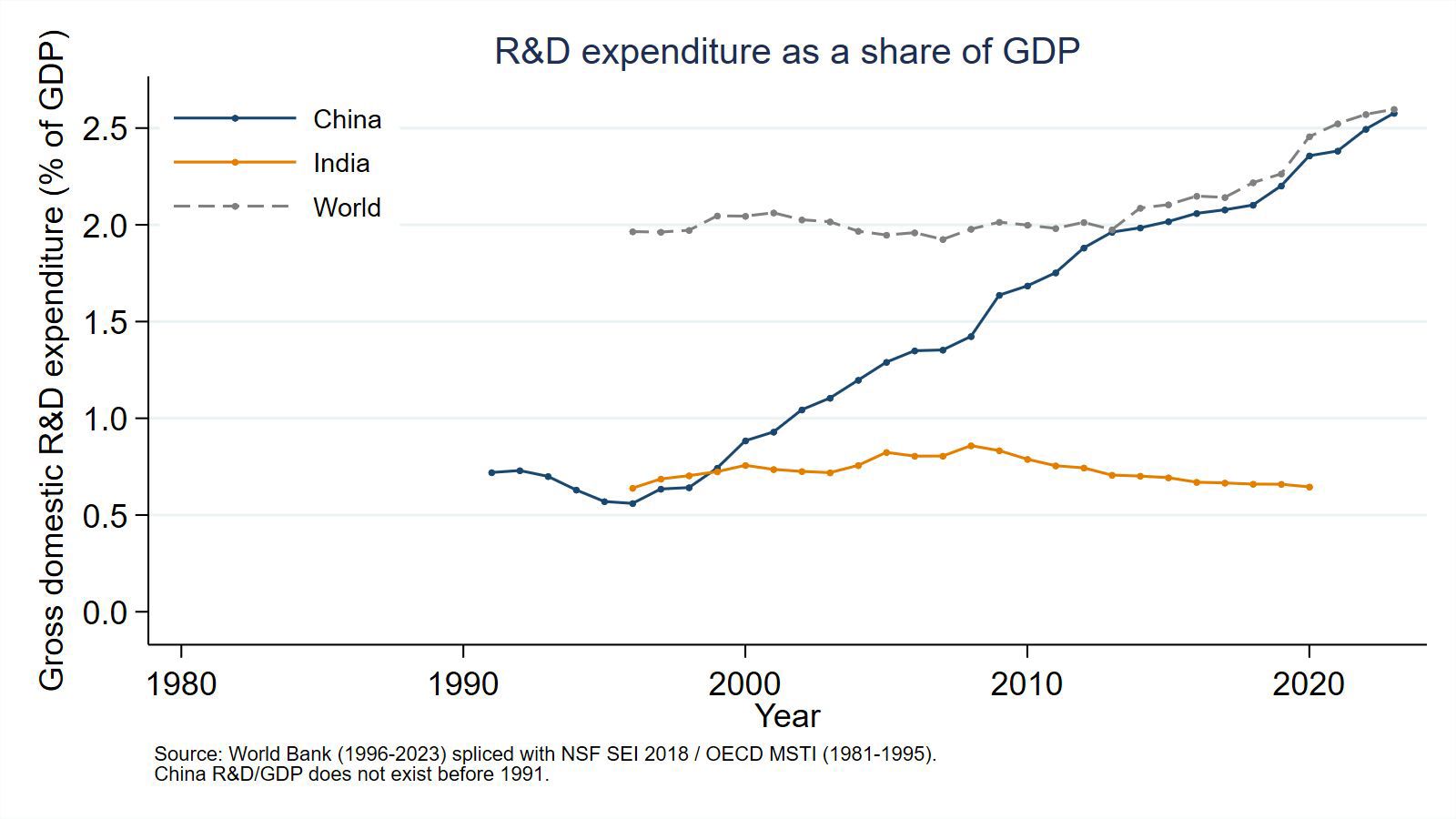
World Bank data spliced with NSF and OECD figures shows
China's gross domestic R&D expenditure climbed from the mid-1990s,
converging with the world average, which itself has risen.
India's R&D spending, by contrast, has remained largely flat.
Atif Mian noted that China pursued an active policy of
rapidly expanding domestic R&D investment and drawing scientific talent
back from abroad by building the infrastructure needed to sustain research
careers, while India did not pursue this to nearly the same extent.
The gap is not one of raw talent supply.
Both nations continue to send large numbers of
high-quality researchers through the American system, but only one has
consistently absorbed them back into a domestic research ecosystem.
Fewer scientific opportunities at home make Indian
graduates less inclined to return than their Chinese peers, he said, with
lasting consequences for the accumulation of scientific capacity over time.
The takeaway for the developing world, per Atif Mian, is
twofold: send the best minds wherever necessary to acquire frontier science,
while simultaneously investing heavily in domestic universities, labs, and
commercial-scientific linkages with the
ultimate aim of indigenizing science and becoming a magnet for others to learn
from.
Copyright Mettis Link News
Related News


| Name | Price/Vol | %Chg/NChg |
|---|---|---|
| KSE100 | 162,374.88 110.96M | -0.95% -1549.44 |
| ALLSHR | 98,620.11 386.58M | -0.91% -906.77 |
| KSE30 | 47,823.16 51.47M | -1.02% -490.65 |
| KMI30 | 232,733.99 57.93M | -1.23% -2903.19 |
| KMIALLSHR | 63,955.68 197.75M | -1.12% -727.41 |
| BKTi | 44,724.17 14.61M | -1.01% -457.04 |
| OGTi | 33,033.72 5.00M | -1.08% -361.88 |
| Symbol | Bid/Ask | High/Low |
|---|
| Name | Last | High/Low | Chg/%Chg |
|---|---|---|---|
| BITCOIN FUTURES | 80,100.00 | 81,450.00 80,040.00 | -1105.00 -1.36% |
| BRENT CRUDE | 117.38 | 117.45 112.74 | 4.21 3.72% |
| RICHARDS BAY COAL MONTHLY | 128.50 | 0.00 0.00 | -1.10 -0.85% |
| ROTTERDAM COAL MONTHLY | 147.10 | 0.00 0.00 | 1.10 0.75% |
| USD RBD PALM OLEIN | 1,182.50 | 1,182.50 1,182.50 | 0.00 0.00% |
| CRUDE OIL - WTI | 103.44 | 0.00 0.00 | 0.17 0.16% |
| SUGAR #11 WORLD | 20.26 | 20.51 20.02 | 0.13 0.65% |
Chart of the Day
Latest News
Top 5 things to watch in this week
 Repatriation of Profit and Dividend
Pakistan Stock Movers
| Name | Last | Chg/%Chg |
|---|
| Name | Last | Chg/%Chg |
|---|