
Pakistan needs climate resilient urban development: State of Pakistani Cities Report

MG News | July 19, 2018 at 05:13 PM GMT+05:00

The State of Pakistani Cities (SPC) report launched today in Islamabad. The report presents the current state of development in the ten largest cities of Pakistan and throws light on the state of economy, social service delivery, planning and development, housing, environment and heritage in the cities of Pakistan.
According to census 2017, 75 million people live in urban areas of Pakistan. 54 percent of the total urban population of Pakistan lives in the ten cities of Pakistan. The report finds that larger cities have seen enormous urban sprawl due to increase in population and change in land use in down town as well as in the periphery of the cities and are becoming extended part of the cities.
Pakistani cities vary in terms of their size, economy, employment and tax revenues. Services and industry are the major employment sectors in Pakistani cities. The share of the service economy in the cities is larger than the share of services in the national economy. Pakistan generates 95 percent of its total federal tax revenue from its ten major cities and Karachi contributes 55 percent, Islamabad 16 percent, and Lahore 15 percent. The average urban per capita income in Pakistan among the ten cities varies from PKR 37,000-70,000. Poverty in urban areas is a major and visible phenomenon. Six out of the top ten major cities have double-digit poverty figures: Quetta, with 46 percent has the highest poverty rate while Islamabad, with 3 percent has the lowest poverty rate.
Access to clean water continues to be a major problem in Pakistani cities. Only 65.2 percent of households in Pakistan's 10 major cities have access to piped water connections. The cities lack sewage treatment facilities and solid waste management which leads to severe environmental pollution and contamination of surface and ground water bodies. Shortage of power supply remains a persistent problem in harnessing the potential of the socio-economic development of the cities. Further, general understanding and appreciation of the environment and heritage is low among the relevant authorities and other stakeholders.
Increasing urbanization has created pressing demands for housing in cities. The absence of any formal provision for the lower-income urban population and the people migrating from rural areas to urban areas has resulted in the creation of large informal settlements, lacking access to adequate level of services. The report also features data gap in the urban sector in Pakistan as one of the key limitation for sustainable development.
The report emphasises that Pakistani cities need to better plan and manage their development to meet the needs and demands of their citizens and indeed of the country. To prosper, cities need to be more responsive towards the environment and adopt technologies and economies that are less wasteful and destructive. Thus, taking a more realistic approach to development that meets the demands of the present without compromising the ability of future generations to meet their own needs.
UN-Habitat Pakistan also launched its Habitat Country Programme (HCP), Pakistan 2018-2022. HCP prepared and aligned with the Pakistan Vision 2025, United Nations Sustainable Development Framework (UNSDF) One UN Programme (OP-III) and New Urban Agenda. It lays down the roadmap for achieving SDG 11 and other crosscutting SDGs. The key objectives of the programme include promoting socio-economic growth, improving access to affordable housing, energy, water and sanitation and other basic services, development of policies and regulatory instruments for sustainable urbanization and reduction of the impact of disasters and climate change.
The Federal Minister for Climate Change, Mr. Muhammad Yusuf Shaikh in his remarks reiterated commitment of the Government of Pakistan to formulate the National and Provincial Urban Policies through participatory approach to arrive at viable solutions for climate resilient urban development in the country and support measures to implement SDG 11 for inclusive, safe, and resilient cities. The State of Pakistani Cities report, 2018 provides the basis for continued collaborative action to develop common and consistent actions, policies and strategies which will ensure that the outcomes are pragmatic and reflect the ground realities across the country.
Dr. Shamshad Akhtar, Ministry of Planning, Development and Reforms in her address highlighted that Pakistan is fortunate to have 31 percent of its population consisting youth in age bracket of 15-29 years. This “youth bulge” provides a unique opportunity for utilizing their potential in contributing to urban economic development. Value generated by the urban economy needs to be equally shared through innovative, integrated financial mechanisms to ensure sustainable flow of finance necessary for cities to meet the needs and provide opportunities for all. Sustainable and inclusive urban economies can be created by promoting urban strategies and policies that strengthen the capacity of cities to realize full potential as drivers of socio-economic development.
The State of Pakistani Cities (SPC) report is spearheaded by the Ministry of Climate change with the technical assistance of the United Nations Human Settlements Program (UN Habitat) funded by the Australian Government. The report highlights the underlying socio-economic drivers contributing to the local development needs of Pakistan.
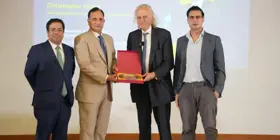
The report launching ceremony was attended by Federal Minister for Climate Change, Mr. Muhammad Yusuf Shaikh and Federal Minister for Planning Development and Reforms, Dr. Shamshad Akhtar, UN Resident Coordinator Mr. Neil Buhne, Australian High Commissioner, Ms. Margaret Adamson and other high level officials.
Related News
.png?width=280&height=140&format=Webp)
| Name | Price/Vol | %Chg/NChg |
|---|---|---|
| KSE100 | 167,844.25 170.38M | -0.40% -670.20 |
| ALLSHR | 101,190.46 479.24M | -0.24% -244.65 |
| KSE30 | 50,308.01 73.54M | -0.54% -271.17 |
| KMI30 | 241,041.17 72.56M | -0.54% -1308.61 |
| KMIALLSHR | 65,768.91 266.90M | -0.34% -227.18 |
| BKTi | 45,905.17 27.93M | -0.59% -271.56 |
| OGTi | 35,557.92 7.24M | -0.32% -112.64 |
| Symbol | Bid/Ask | High/Low |
|---|
| Name | Last | High/Low | Chg/%Chg |
|---|---|---|---|
| BITCOIN FUTURES | 75,915.00 | 77,940.00 75,590.00 | -1780.00 -2.29% |
| BRENT CRUDE | 104.25 | 106.36 101.34 | 1.67 1.63% |
| RICHARDS BAY COAL MONTHLY | 110.00 | 0.00 0.00 | -9.00 -7.56% |
| ROTTERDAM COAL MONTHLY | 113.00 | 0.00 0.00 | 0.45 0.40% |
| USD RBD PALM OLEIN | 1,191.50 | 1,191.50 1,191.50 | 0.00 0.00% |
| CRUDE OIL - WTI | 97.00 | 99.43 94.73 | 0.65 0.67% |
| SUGAR #11 WORLD | 14.68 | 14.91 14.59 | -0.22 -1.48% |
Chart of the Day
Latest News
Top 5 things to watch in this week
 Banking Sector Spreads
Pakistan Stock Movers
| Name | Last | Chg/%Chg |
|---|
| Name | Last | Chg/%Chg |
|---|